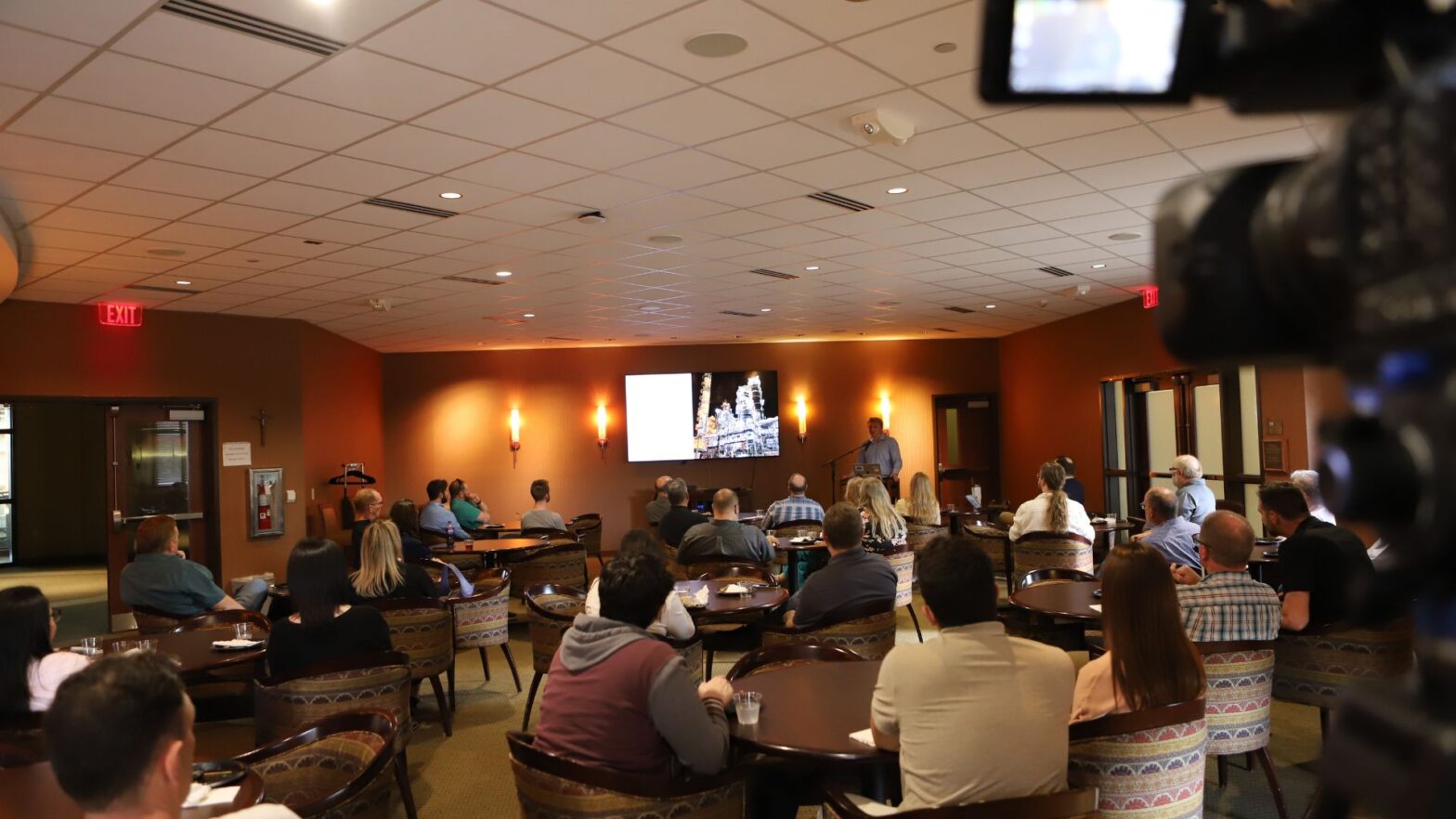
A diverse group of technologists, educators and business professionals gathered June 12 at Newman University to explore how artificial intelligence (AI) can enhance work, serve communities and increase everyday productivity.
Hosted by Newman University’s School of Business & Technology, the event titled “Leveraging AI for Business Innovation, Community Service and Personal Productivity” featured two expert presentations and group discussions. Attendees ranged from software engineers and scientists to nonprofit leaders and people curious about AI.
The event was a joint meeting of three local associations: AI Innovators of Wichita and Data Professionals of Wichita. The evening was sponsored by Newman and Cornerstone Data.
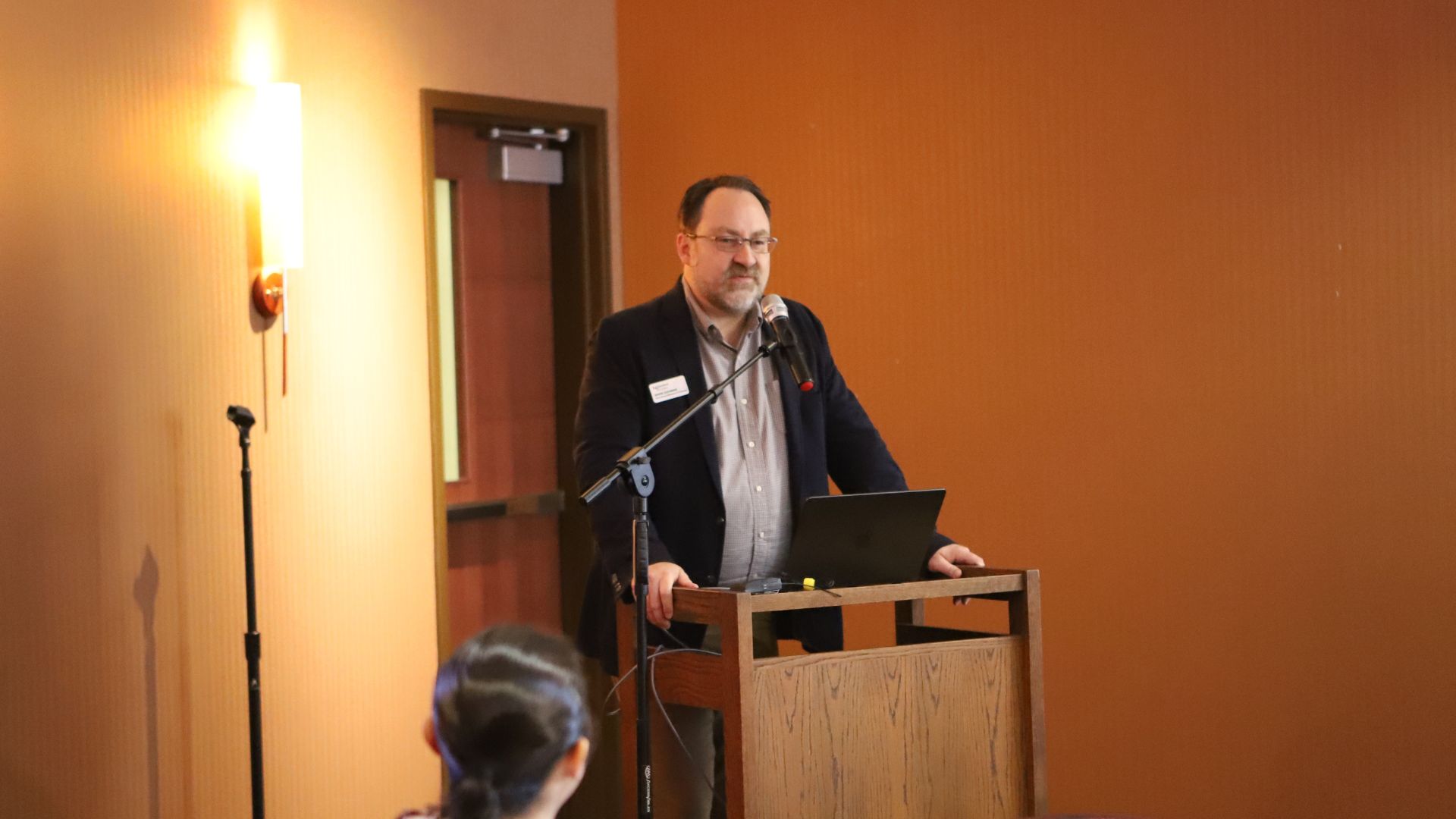
“This is a conversation we’re all invited into,” said David Cochran, dean of Newman’s School of Business & Technology. “AI is not just a buzzword — it’s a rapidly evolving tool that will reshape our jobs, industries and lives.”
AI in action: From manufacturing floor to decision-making engine
The event’s first main speaker, Grant Johnson, serves as AI software engineer leader at Invista, a subsidiary of Koch Industries. He walked the audience through a powerful use case: the development of One Stop, a digital platform designed to make plant operations smarter and faster.
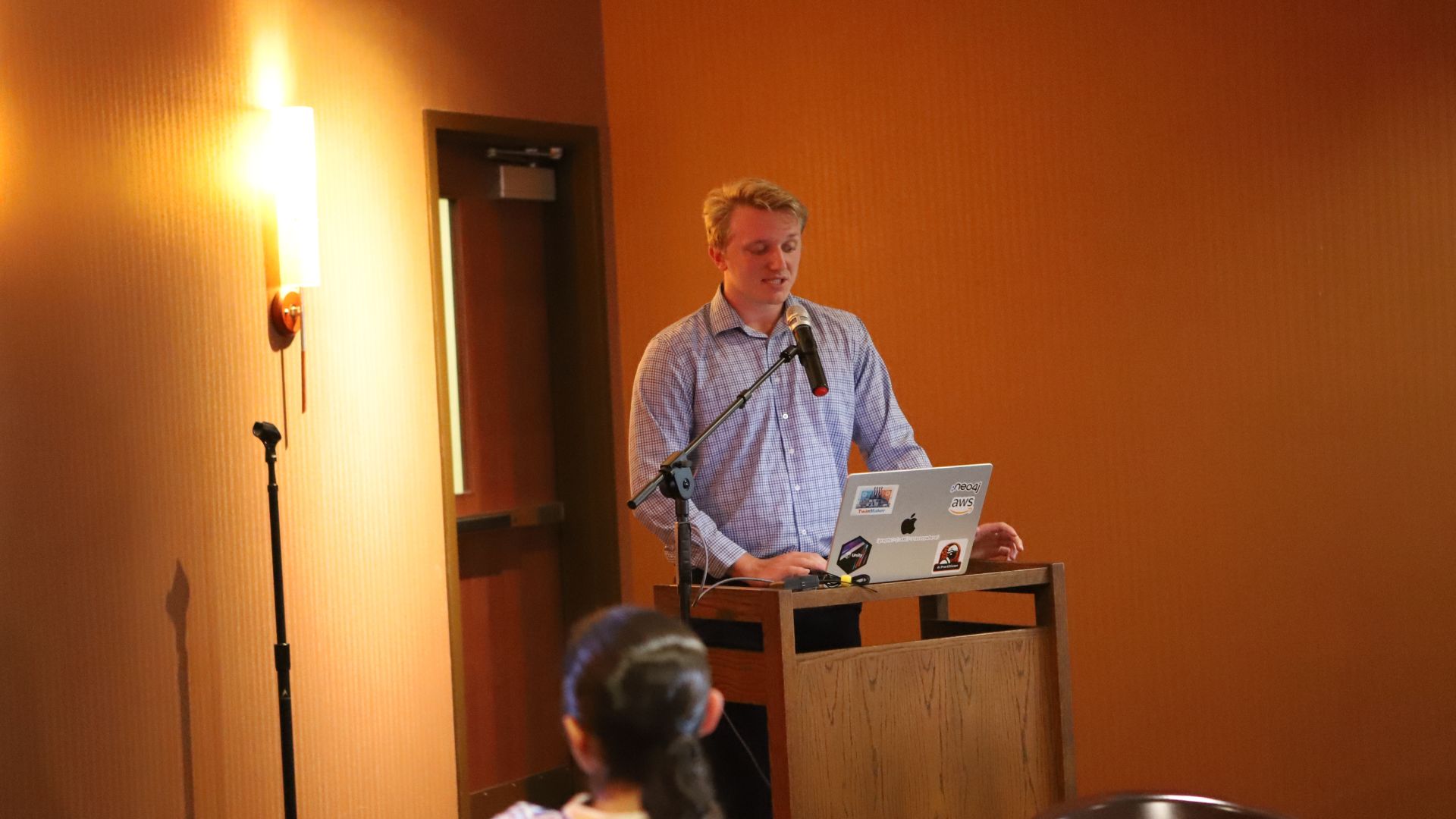
“In a factory with millions of data points, knowing which valve to check or which document to reference can take hours,” Johnson said. “Our goal was to connect everything — sensors, work orders, blueprints — into one streamlined interface.”
Powered by graph databases and generative AI, the One Stop system not only visualizes equipment and sensor data, it also answers contextual questions using natural language. The result: New operators can make expert-level decisions in minutes, not months.
Johnson also detailed an “agent architecture” approach — multiple AI agents designed to collaborate and answer complex queries. This setup enhances safety, efficiency and onboarding across Invista’s 13 global sites.
“AI isn’t replacing employees,” he said. “It’s preserving institutional knowledge and helping us make better, faster decisions.”
Everyday AI: Personal productivity meets community impact
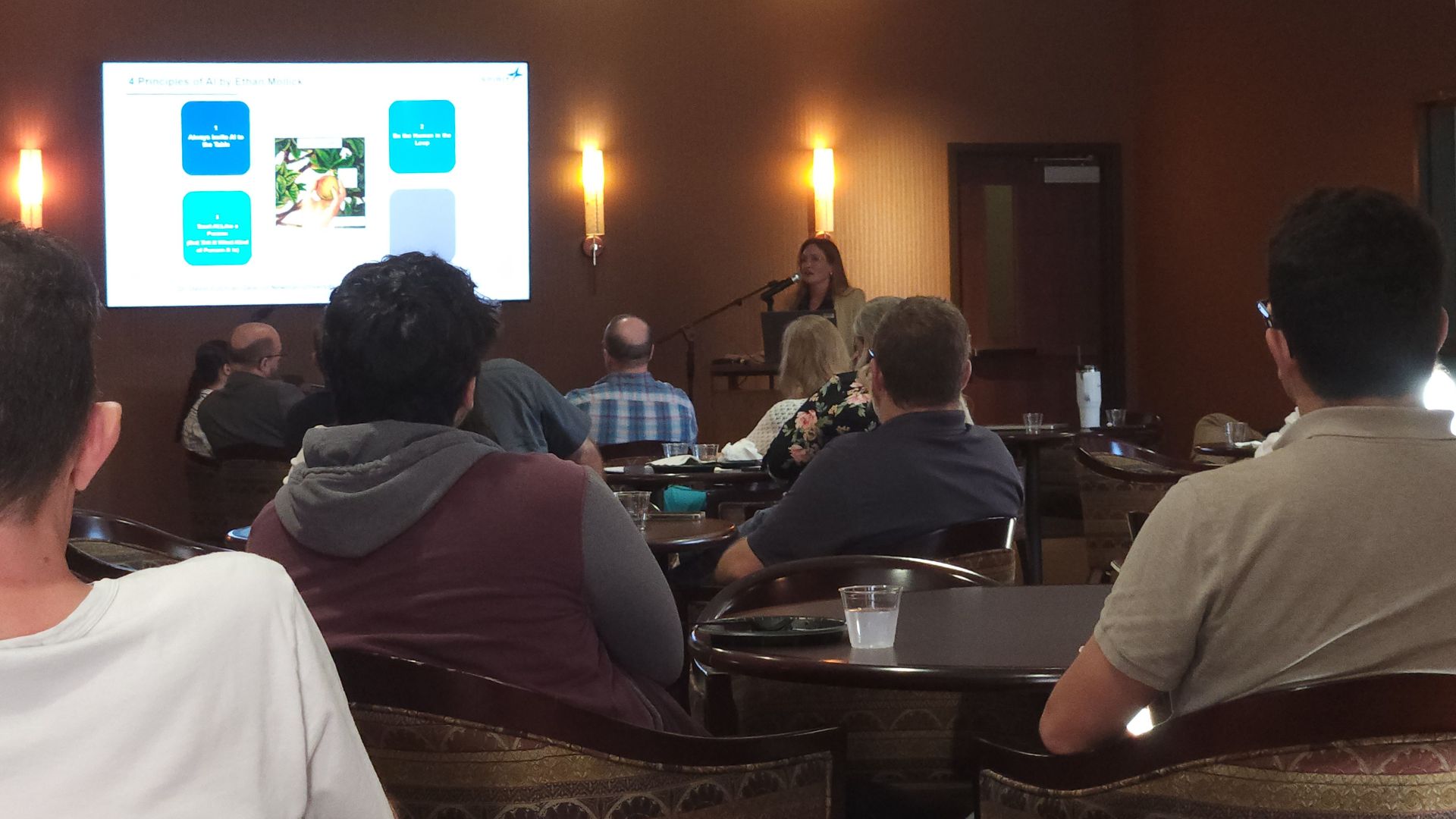
While Johnson emphasized industrial AI, the second speaker, Meghan Corwell, brought the conversation closer to home.
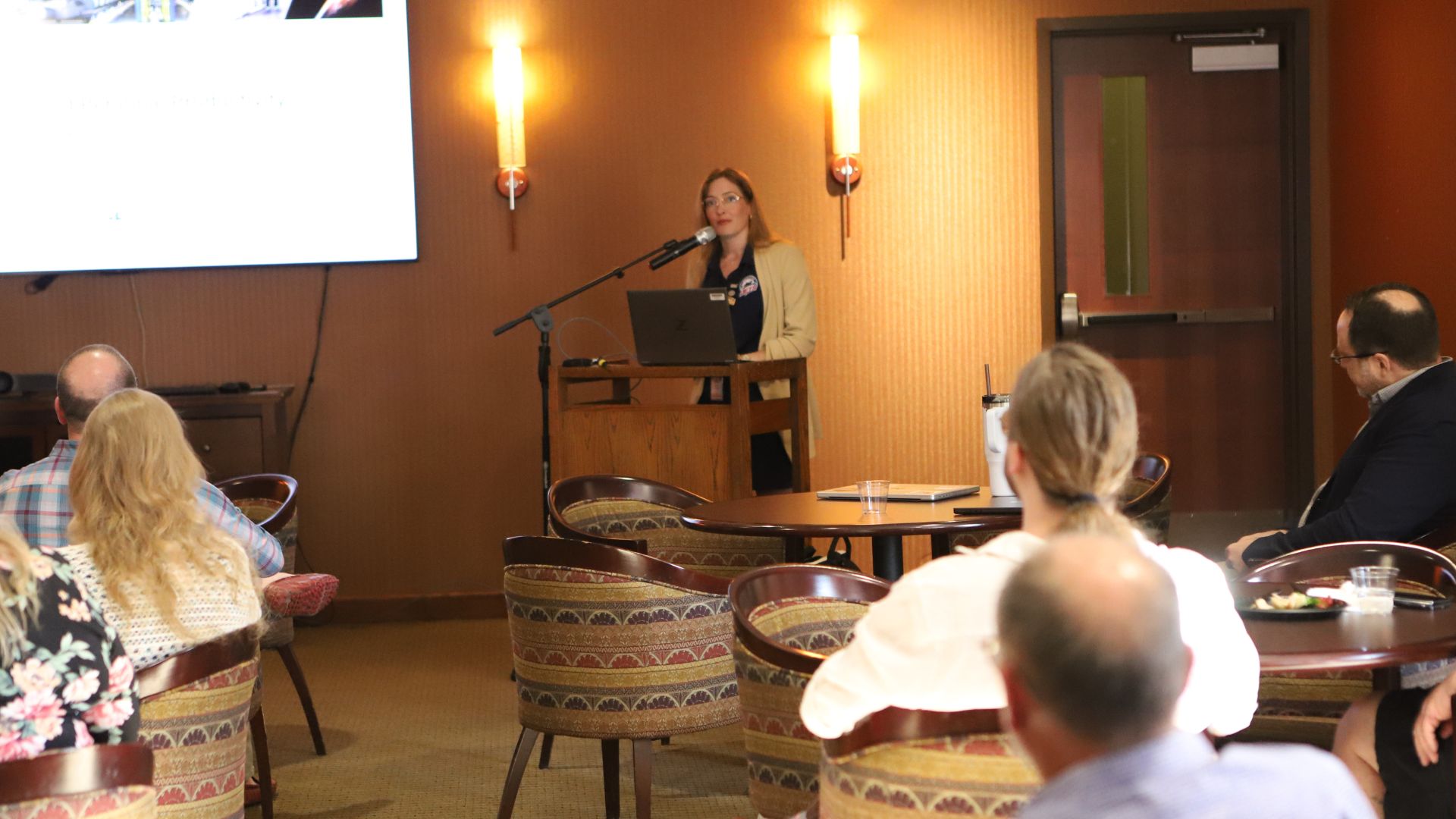
Corwell, a materials and process engineering scientist at Spirit AeroSystems and a soon-to-be graduate of Newman’s Master of Business Administration (MBA) program, shared how she has been using AI for the past three years to amplify her impact — at work, in her community and with her family.
“I’m involved in a lot — committees, volunteer work, my kids’ school, grant writing — and I couldn’t manage it all without AI,” Corwell said.
From drafting STEM outreach activities and streamlining volunteer logistics to writing bedtime stories for her children, Corwell demonstrated AI’s versatility beyond the boardroom.
She has used AI tools to draft grant proposals, one of which secured $1,000 for a local elementary school. Another project helped her automate daily personal development routines, such as book reviews and habit tracking.
share ideas
“If you’re overwhelmed, AI can help you think more clearly, work more efficiently and find time for what matters most,” she said.
Corwell also emphasized ethical use, encouraging attendees to “be the human in the loop” — verifying, editing and taking responsibility for AI-generated output.
Newman’s AI strategy: A local hub for global change
Cochran opened the session by highlighting Newman University’s growing role in AI education and workforce development. The university is launching new undergraduate degrees in data science and applied AI, with expanded options in computer science and cybersecurity this fall. A new MBA concentration in AI strategy also debuts this August, available both as a concentration and a stand-alone graduate certificate.
“We’re not just adding AI to the syllabus — we’re transforming how students think, create and deliver value,” Cochran said. “Whether you’re in accounting, IT, health care or logistics, AI is part of your future.”
Newman also plans to offer professional development boot camps starting this fall, including one focused on AI for professional productivity. The sessions aim to help mid-career professionals leverage AI tools for more effective workflows and decision-making.
Cochran noted that companies across Wichita — from financial institutions to engineering firms — are already exploring or implementing generative AI solutions.
“We have to be ready to partner, train and co-create with local employers,” he said. “AI is coming to your workplace, whether you invite it or not. So let’s invite it.”
A community embracing the future
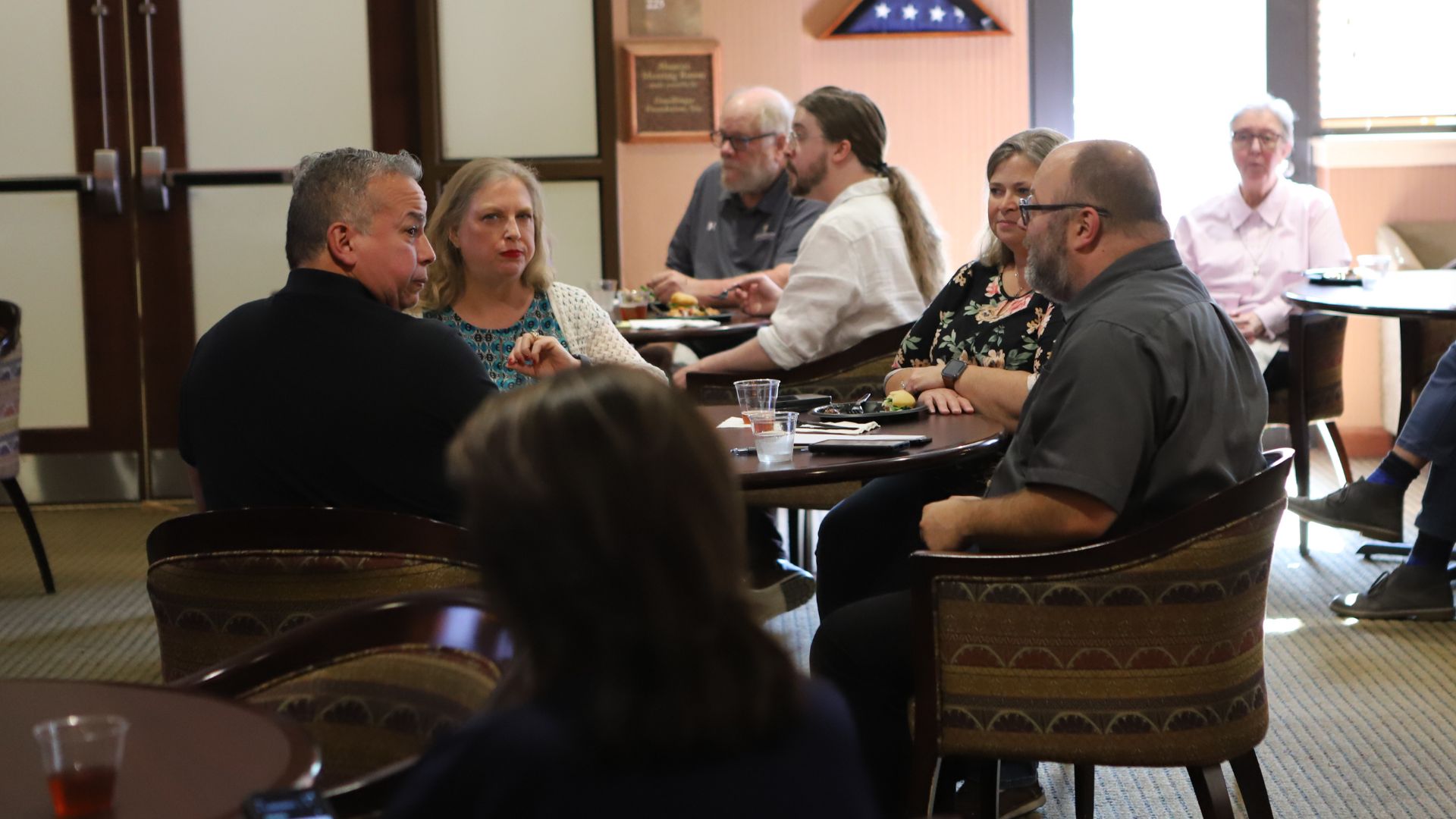
The evening concluded with an interactive group forum, where attendees shared their own AI successes, recommendations and questions. The discussions reinforced the evening’s core messages: AI is a powerful tool for human augmentation, not replacement, and AI can bring tangible value to business, communities and personal well-being.
The event served as a testament to Wichita’s forward-thinking engagement with AI, showcasing how local leaders and professionals are integrating this technology to drive innovation and enhance productivity.
For Wichita’s business community, events like this are not just educational; they are energizing. They help demystify complex technologies, foster collaboration and inspire practical steps forward.
Or, as Corwell put it, “AI might not take your job — but someone using AI might.”
Explore Newman’s AI programs
Learn more about Newman University’s AI programs or future community events or follow Newman University School of Business & Technology on social media.