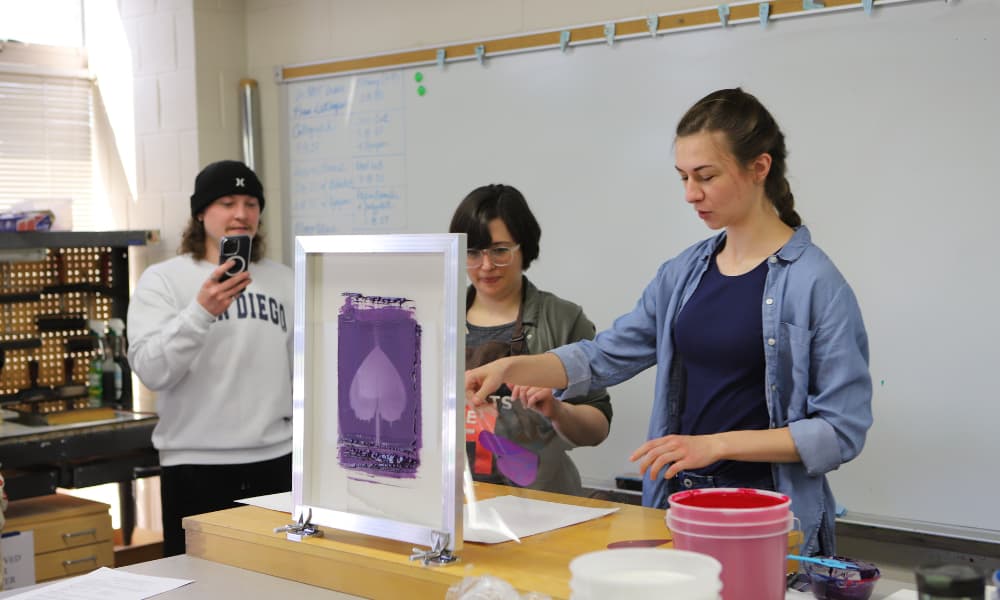
As digital technology continues to reshape the way we communicate, create, and connect, Newman University is staying ahead of the curve with its Bachelor of Arts in Digital Design, a dynamic and growing program that blends creativity with marketable skills for the 21st century. While the program was established before her arrival, Professor Emily Ritter has played a key role in implementing and expanding it since joining Newman’s art department.
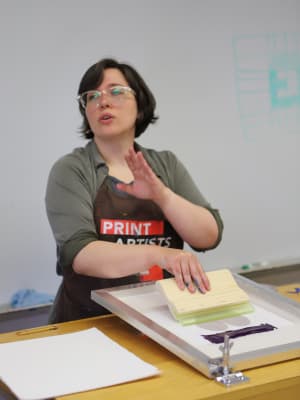
The program teaches foundational design principles while equipping students with industry-standard tools and critical thinking strategies. With an emphasis on UX/UI, motion graphics, and web design, students are encouraged to develop not only their technical skills but also their individual creative voices.
“The Digital Design program at Newman is unique because there’s really nothing else like it in the region,” said Ritter. “We’re one of the only schools offering a UX/UI-specific design major with flexible learning options—on-campus, hybrid, and online—and a strong Liberal Arts foundation through the Newman Studies Program.”
The program is still in its early years, with its first cohort yet to graduate, but the opportunities ahead are broad and exciting. Career paths range from UX Designer and Web Designer to Creative Director and Multimedia Artist.
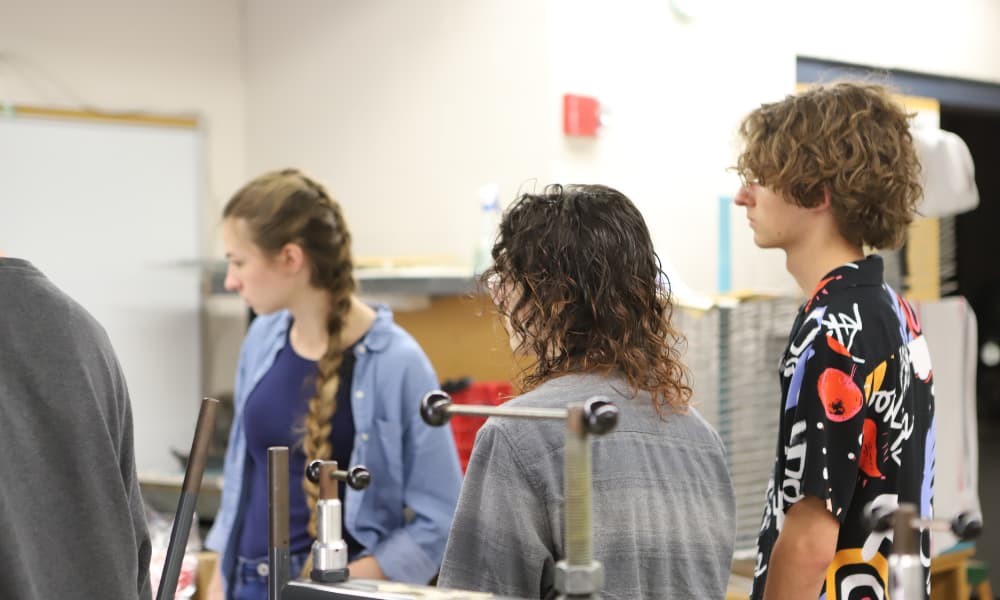
One of the initial challenges Ritter faced was building awareness of the program and helping people understand what Digital Design actually entails. “I’ve found that part of the work incredibly rewarding,” she said. “I’ve been engaging with the community through presentations, school visits, workshops, and collaborative events that highlight the impact and relevance of digital design.”
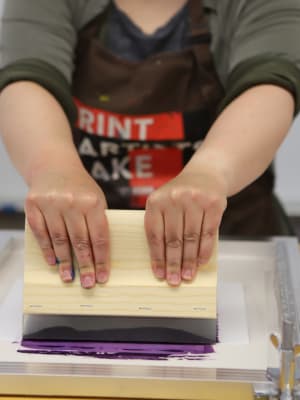
For students considering a future in this field, Ritter’s advice is both practical and passionate: “Stay curious and adaptable. This is a fast-changing field, so build a solid base in design and stay open to new tools and trends. And create work that excites you—your enthusiasm will always shine through.” Looking forward, Ritter envisions the program becoming even more interdisciplinary, partnering with departments across campus to solve real-world problems using human-centered design. “Digital design is about more than aesthetics,” she said. “It’s about communication, connection, and innovation.”
Outside the classroom, Ritter is also a practicing artist with a love for book arts. This summer, she plans to complete a long-anticipated project: an artist book about a ‘lonely firefly,’ blending her storytelling instincts with visual artistry. As the Digital Design program grows, it’s clear that Newman is preparing students to be not just designers—but designers of the future.