Senior Kyla Toombs was in a high school biology class when she realized she wanted to dedicate her career to developing life-changing medical treatments.
Now a biology major with a concentration in biomedical research, Toombs is working on making that goal a reality. Over the summer, she was accepted into three competitive summer research fellowships across the country, each of which only accepts a handful of students each year. She ultimately chose the 10-week Biomedical Scholars Summer Undergraduate Research Program at the University of Iowa — one of her top choices.

“I knew I liked the programs and the research … so I pretty much accepted the offer immediately,” Toombs said.
Toombs, who graduated from Bishop Carroll Catholic High School, earned advanced standing credits through Newman. She chose the college for its tight-knit academic community.
“I really liked Newman’s science program, the professors and the small class sizes,” Toombs said. “To me, it made the most sense to continue my degree in a place where I felt invited and welcomed.”
Breakthroughs in the laboratory
During her 10 weeks in Iowa City from May 23 through July 31, Toombs worked in the Shyam Lab in the Department of Anatomy and Cell Biology under principal investigator Raji Shyam, Ph.D. There, she investigated cellular mechanisms behind Fuchs Endothelial Corneal Dystrophy (FECD), a degenerative and blinding eye disease.
According to the Mayo Clinic, Fuchs is “a condition in which fluid builds up in the clear tissue at the front of the eye, called the cornea. This causes the cornea to swell and thicken, leading to glare, blurred or cloudy vision and eye discomfort.”

Toombs worked with bovine corneal endothelial cells, pivoting from an initial membrane stiffness project to examine how proteasome inhibition induces cytoskeletal abnormalities in corneal cells.

“Basically, I took both healthy corneal endothelial cells as a control and then an experimental group that was treated with a drug, MG-132, which is a proteasome inhibitor,” Toombs said. “After analyzing all of the results, we were able to see that changes in the cell cytoskeleton, like those that can be seen in FECD, can be induced by a proteasome inhibitor. This strengthens the fact that proteasome inhibition plays a role in FECD symptoms and now we have found that cytoskeletal abnormalities can also be found.”
Toombs presented her findings at the Summer Undergraduate Research Conference at the conclusion of the program.
“The most rewarding aspect of the experience was getting to have pretty much one-on-one hands-on lab experience every day,” she said. “I learned a bunch of new research techniques including cell culturing, immunostaining and confocal microscopy. I also had a ton of fun exploring Iowa City and the community there.”
A family passion for science
Toombs’ determination in the sciences is a family trend. Her uncle, Asa Toombs ’13, graduated from Newman with a Bachelor of Science in chemistry before earning his graduate degree at Iowa State University. He now serves as an assistant professor of chemistry at Emporia State University.

“I was excited for her to attend Newman,” Asa said. “I valued my experiences of the small classroom sizes and the faculty that really cared about us as a whole person and not just a student in the seat at Newman. My career path changed due to my one-on-one interactions with the faculty in the chemistry department, and I will always be grateful for that.”
Watching his niece secure competitive national research opportunities brought immense pride. He is also proud of Toombs for “taking the leap” to pursue summer programs — something he wishes he would have done during his own undergraduate experience.
“I was extremely proud of the work that she put into her studies to prepare her for the experience as well as the work it took to put together competitive applications,” Asa said. “I think it takes a lot of courage to attempt something like these internships in preparation for one’s future goals.”
I think it takes a lot of courage to attempt something like these internships in preparation for one’s future goals.
Asa Toombs ’13, uncle of Kyla Toombs
As a scientist, Asa is familiar with the highs and lows of research. He hopes Toombs can channel her passion as a genetic research scientist and “never lose her curiosity.”
“Research can be an extremely exciting and rewarding, albeit sometimes frustrating, field that really pushes our own understanding/knowledge,” he said. “I hope that she continues to take moments and enjoy the little aspects of life during every stage. Sometimes it can be easy to forget to do that when you are working towards a singular goal.”
Empowered to transform society
At Newman, Assistant Professor of Biology Tomo Bell, Ph.D., has worked closely with Toombs for two years and helped guide her during the internship application process.
Bell described Toombs as “dedicated, meticulous, determined, filled with curiosity and passion to pursue her career goal.” When Toombs received multiple fellowship offers, Bell noted she was “not surprised at all. Every professor wants Kyla.
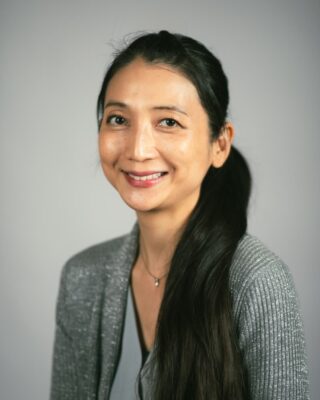
“I’m so blessed to be a part of her personal journey to become a medical scientist,” Bell said. “Her determination to pursue her goal also inspires other students and me.”
As Toombs prepares for graduate school in genetic research, she remains focused on making an impact in biomedical innovation.
“My experience in Newman’s biology program has been incredible,” Toombs said. “I have absolutely loved all of the professors I have had and the classes I have been able to take. I know I will leave Newman with an abundance of knowledge, both in my degree and in general life lessons.”
When asked what kind of person she strives to become, Toombs’ answer directly reflected Newman’s mission: “An empowered professional that is transforming society through my genetics research.”

Earn a biology degree from Newman University
Acquire knowledge and develop skills needed for careers in healthcare, science and research.