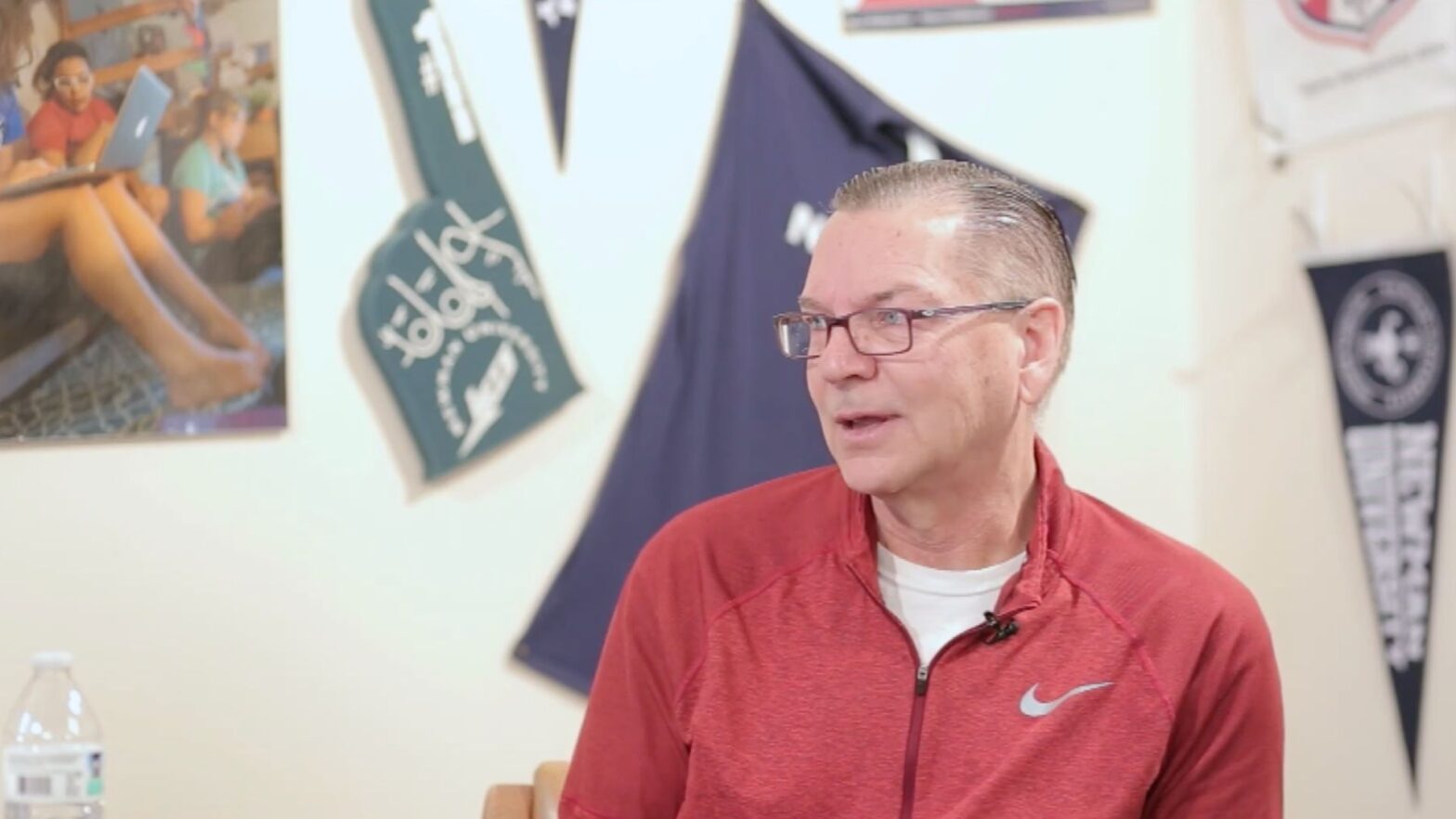
Former basketball coach Mark Potter returned to Newman this January, but it wasn’t for the sport.
Potter and his wife, Nanette, spoke to roughly 350 Newman students and staff about depression and the importance of seeking help. He shared more details about his personal struggles in “The Newman Bond” podcast on the Newman University YouTube channel.

Now traveling around the United States, the couple is sharing their experience in the hopes of helping others in their moments of crisis.
The turning point
Potter said his struggles became most prominent during his 19-year coaching career. In 2005 while acting as head coach at Newman, the pressure of his work and untreated anxiety led to symptoms he didn’t initially understand.
“I had always had anxiety,” Potter said. “I just didn’t call it that. Now, obviously, we figured out all my anxiety led to severe depression.”
Four weeks into his depression, he said he began to have suicidal thoughts, but the stigma around mental health and men kept him from getting help.
“I didn’t address it, and the reason I didn’t address it is because the stigma is so strong,” he said. “And not to mention, I’m the head coach at Newman University … I’m a man, I’m a father, I’m a husband. I’m supposed to be in charge.”
He eventually sought treatment after his wife insisted, which led to him missing eight games that season. After returning, he had a conversation with his team about why he was gone because he felt he owed them an explanation.
“So, I took them in, and I told them everything, and then before we left — and here comes the stigma — I said, ‘Don’t go outside this locker room and tell your moms and dads … and sure as heck, don’t talk to the media,’ and I thought that’d be the last time I’d ever talk about it.”

But it was a conversation with a first-year student that same day that changed his perspective. The player told Potter he had battled severe depression himself and attempted suicide twice in high school.
“He said, ‘Well, coach, I think it’d be pretty cool if you did talk to the media,’” Potter said. “This is my freshman that’s playing for me at Newman that told me this … He was way wiser than I was at that point in terms of it because I was still in the midst of trying to hide things.”
Potter said he changed the subject at the time because he didn’t want to talk to him about it, but that the moment stayed with him. Later that night, he woke his wife at 3 a.m., unable to shake the exchange.
“And that, in my opinion, is the Holy Spirit working on you. It’s God saying, ‘You hear him? You hear that freshman talking to you?’ Oh, I heard it loud and clear.”
Sharing the struggle
From that day forward, Potter said he made his story public, and that it began to reshape his life and career.
“Prior to that point in time, I’d never spoken openly about my mental health issues,” he said. “Nobody ever spoke openly about their personal journey… because the stigma was so strong.”
Today, Potter and Nanette emphasize the power of sharing personal experiences and reaching out to others.
“Your story matters,” he said. “Your story can and will save someone’s life if you will just share it.”
After continuing to coach following his depression diagnosis, another health scare ultimately led to Potter stepping down from basketball in 2017.
His retirement turned into Potter and Nanette sharing their experiences with mental health in more than 30 states to coaches, student-athletes and community groups — including at Newman.
“Many people have said… after I got out of coaching is when I made the most impact,” he said. “They’re probably right.”
Newman’s mental health services
A professional personal counselor and in-person counseling is available to students through Newman University.