Dana Bass, the campus mental health project coordinator, is supporting students while furthering her own education in the field as a Newman Master of Social Work (MSW) student.
Bass’s role is supported by the Substance Abuse and Mental Health Services Administration (SAMHSA) grant. She accepted the position in November 2025 and has been passionately serving students in her office in the Student Success Center ever since.
“It’s very rewarding to be able to support other students,” she said. “If I can help someone else’s child, it’s a feeling of being able to give back.”
A journey shaped by personal experience
Originally from La Verne, California, Bass moved to Kansas more than a decade ago after making a life-changing decision to seek a safer, healthier environment for her family.
“I was drawn to the field of clinical social work because it was going to allow me to help people as a counselor, like the ones that helped me,” Bass said.
Her path was influenced by personal hardship.
“My older four children and I went through a lot with their dad, who is a retired Marine. He had severe PTSD (post-traumatic stress disorder) and our lives were like walking on eggshells,” she said. “There was a lot of trauma, chaos and confusion.”
Bass described a life marked by “moments of fear, pain and even in the midst of all of that, hope,” which ultimately led her to pursue healing for herself and her children.
“Therapy and my faith in Jesus were my lifelines during that time,” she said. “Therapy saved me and my children. God calls us to lead and to be the light in the dark. I really believe that this is where I am meant to be. I was led here with complete discernment.”
Finding the right path through social work at Newman
Bass earned her bachelor’s degree in psychology from Wichita State University in 2021. As a mother of six, Bass worked odd jobs around her children’s schedules as a substitute teacher, night shift grocery stocker at Dillons and an accounting job for a pharmaceutical company. When it came time to pursue her master’s, flexibility was essential.
“Newman checked all the boxes,” Bass said. “I also liked that upon graduation, I would be prepared to take the licensure exam.”
Newman’s partnership with the Veterans Affairs office for practicum placements was especially attractive to Bass. Her ultimate goal as a future social worker — aside from setting the best example she can for her children — is to help other veterans and their families who “have been and are in the trenches, hanging on for their lives,” she said.
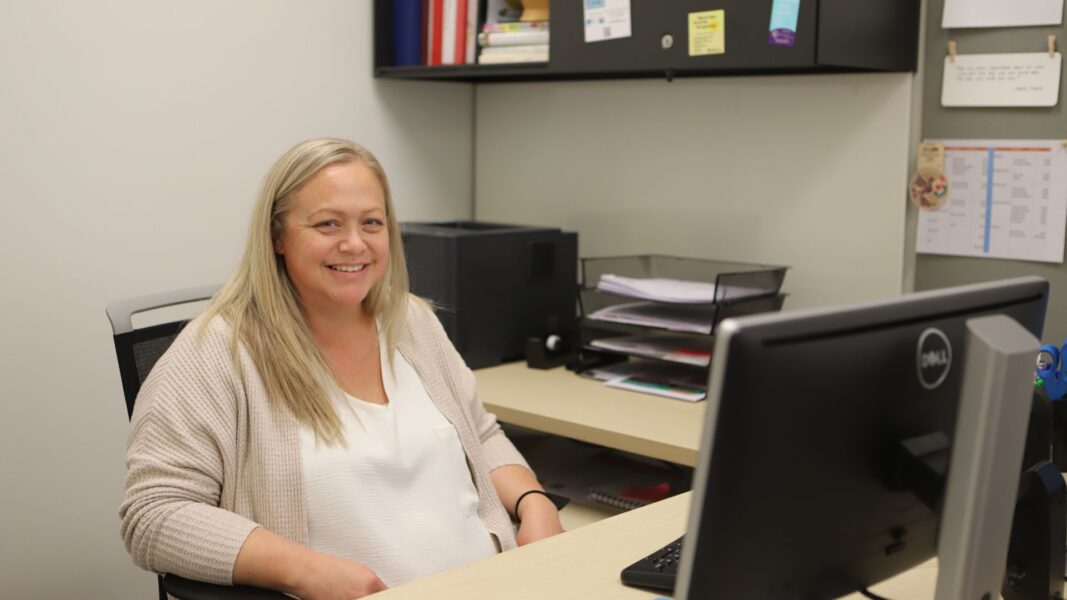
Not only is her work crucial for connecting Newman students with mental health resources, it also doubles as a way to complete her practicum hours for the MSW program. Bass said the role came at “just the right time.”
“This position was available and my instructor asked if I was looking for a full-time job with a practicum placement which was like the unicorn of all practicum placements,” she said.
Previously juggling long workdays and evening practicum hours, the new role provided balance.
“Being able to go to work every day and have it count towards my practicum hours has enabled me to be there for my own family and Newman students, which is the best scenario I could’ve been given,” Bass said. “I feel very fortunate for this opportunity.”
So far, the Newman experience as a nontraditional student has been “great,” Bass said.
“I like how the program is offered online with our field class meeting once a month. It enables me to get my coursework done, raise my children and attend all of their sports, activities and school events.”
Being an older student also has perks when it comes to doing her job.
“I think being an older student has benefited me in this position because when students come to me, they don’t see me as a peer, and maybe they’re more likely to ask for help,” she added.
Newman’s mental health support for students
Bass wants all students to be open to receiving help if they need it.
“If you are struggling, there is not an ounce of judgment,” Bass said. “All of us in the Student Success Center want every student to receive whatever support they need.”
Funded through the SAMHSA grant, Newman currently offers 12 free counseling sessions per year to all full-time students. Students start by scheduling an appointment with the Student Success Center, completing paperwork and then receiving a referral for services.
If a student prefers off-campus counseling, the Mental Health of America organization works with Newman to provide that option. Students can also access UWill, a 24/7 online mental health platform funded by the Student Government Association.
“Our contracted counselors are wonderful and full of experience,” Bass said. “Mental health referrals to our counseling services take 10-15 minutes. Everything that is talked about and who receives counseling services is confidential.”
Bass also uses her own story to help reduce stigma.
“I share my own personal experience because I’m not afraid to say that I went to therapy,” she said. “It was the best decision I could have ever made and ended up being the best thing I ever did for my children. Maybe if others know the struggles that I had and went through, they’ll pursue help and support.”
Building connections and community
Bass is set to graduate in spring 2027 and hopes to continue helping others through counseling.
“My dream job is to help people in a counseling role, wherever that may be,” she said. “Everyone wants to be seen and matter.”
For now, she remains committed to her work at Newman.
“I plan to stay in the mental health project coordinator role for however long Newman will keep me here,” Bass said. “I’ve learned a lot about myself and that I can help all kinds of people, not just veterans. I love being able to make that connection with students that might need some extra support.”
If I can give one person hope, a positive outlook or be a light in the dark, then this is all worth it.
Dana Bass, mental health project coordinator at Newman
One of Bass’s class assignments required her to interview a social worker about their experiences in the field. She chose Newman alumna Shonnetta Gabriel, the director of behavioral health at HealthCore Clinic in Wichita, and was inspired by the opportunities in social work.
“Shonnetta pointed out that practicum is where we develop our skills, find our niche and gain professional development skills,” Bass said. “It’s a great place to build confidence and understand how the different workplaces function.”
Above all, her mission is clear: to help provide hope for others and to reduce the stigma surrounding mental health.
“We are all out here trying to survive our circumstances, whatever they may be,” she said. “If I can give one person hope, a positive outlook or be a light in the dark, then this is all worth it.”
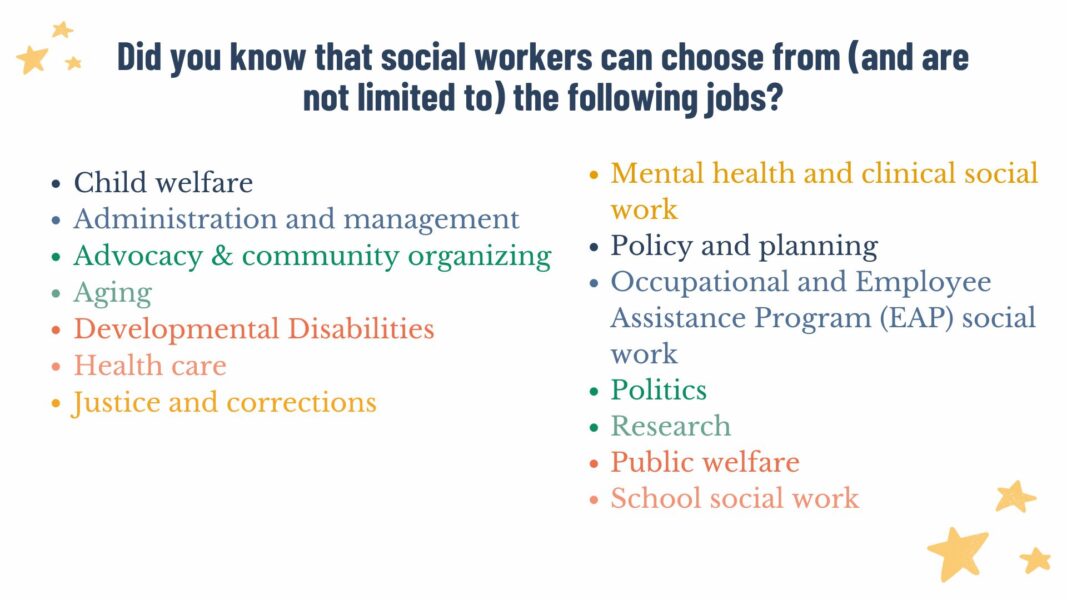
Explore Newman’s Master of Social Work program
The Newman University MSW program is intentionally designed to prepare a trauma-responsive behavioral health workforce equipped to serve individuals, families and communities experiencing complex and chronic trauma.