Article At A Glance
- Newman University in Wichita, Kansas offers an unusually personal college experience — small class sizes, faculty who know your name, and free tutoring built right into the system.
- Newman’s nursing and science programs carry serious weight in Kansas, with faculty connections that can open doors to graduate school and medical careers.
- One detail most prospective students overlook: Newman is one of Kansas’s first designated Hispanic-Serving Institutions, unlocking additional scholarship opportunities many students don’t know exist.
- Despite its Catholic roots, Newman welcomes students of all faiths and backgrounds, making it one of the most inclusive private universities in the state.
- Newman University operates with a clear mission — to empower graduates to transform society — and that mission shapes everything from advising to campus culture.
Choosing the right university is one of the most important decisions you will make, and if Newman University is on your list, there are some things you need to know before you decide.
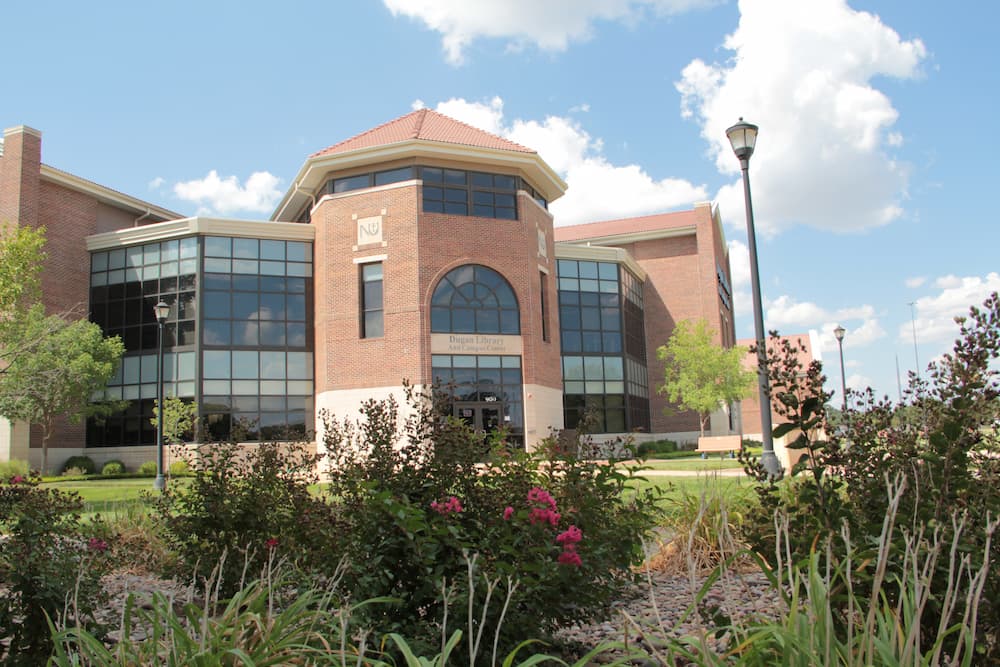
Newman University, founded in 1933, is a private Catholic university located in Wichita, Kansas. It currently serves around 857 students in an urban campus setting, which puts it in a completely different category than large Kansas institutions like the University of Kansas or Kansas State University. That difference is not a weakness — for the right student, it is the entire point.
Newman University Is Worth Your Serious Consideration
Bigger is not always better when it comes to college. At a school with thousands of students, it is easy to get lost in lecture halls, miss advising appointments, and graduate without a single professor knowing your actual goals. Newman flips that model entirely. The university’s small size creates a structure where support is not something you have to hunt for — it is built into the experience from day one.
Students and faculty consistently describe Newman as a place where your success is treated as a shared priority. That is not marketing language. It shows up in the free tutoring, the accessible advising, and the fact that professors at Newman are known for learning students’ names and backgrounds quickly. For a high school senior stepping into college for the first time, that kind of environment can be the difference between thriving and falling behind.
You Are Not Just a Student ID Number at Newman
One of the most common regrets students express after attending large universities is feeling invisible. At schools with 20,000-plus students, that is almost unavoidable. Newman’s entire academic culture is structured around the opposite experience.
Professors Know Your Name From Day One
At Newman, small class sizes mean professors are not managing hundreds of students per course. They have the time and the intention to invest in each student individually. Students at Newman regularly describe their professors as genuinely caring about their progress — not just their grades, but their actual trajectory toward graduation and into a career. That kind of relationship is rare at large institutions, and it does not happen by accident at Newman University. It is a direct result of intentional class sizes and a faculty culture that prioritizes mentorship.
Small Class Sizes Mean More Direct Support
When you have a question, you get an answer — not from a teaching assistant three days later via email, but from the actual professor. Newman’s student-to-faculty ratio and small campus structure mean academic support is immediate and personal. Free tutoring is available to all students, and academic advising is designed to keep students on track rather than reactive to problems after they happen.
This level of support matters most during freshman year, when the gap between high school and college expectations hits hardest. Newman’s infrastructure is specifically designed to catch students before they fall behind, which explains why students describe the environment as one where they feel genuinely supported rather than overlooked.
Personal Relationships That Follow You Into Your Career
The relationships you build at Newman do not end at graduation. Faculty connections at a university like Newman University carry real professional weight. When a professor knows your work ethic, your goals, and your personality, they become a powerful advocate — for graduate school recommendations, job references, and professional networking. At a large Kansas university, that kind of ongoing faculty relationship is the exception. At Newman, it is the expectation.
Newman’s Academic Programs Punch Above Their Weight
Private and small does not mean limited. Newman offers a strong range of programs, and certain departments have built reputations that extend well beyond the Wichita campus.
Nursing and Science Programs With a Strong Kansas Reputation
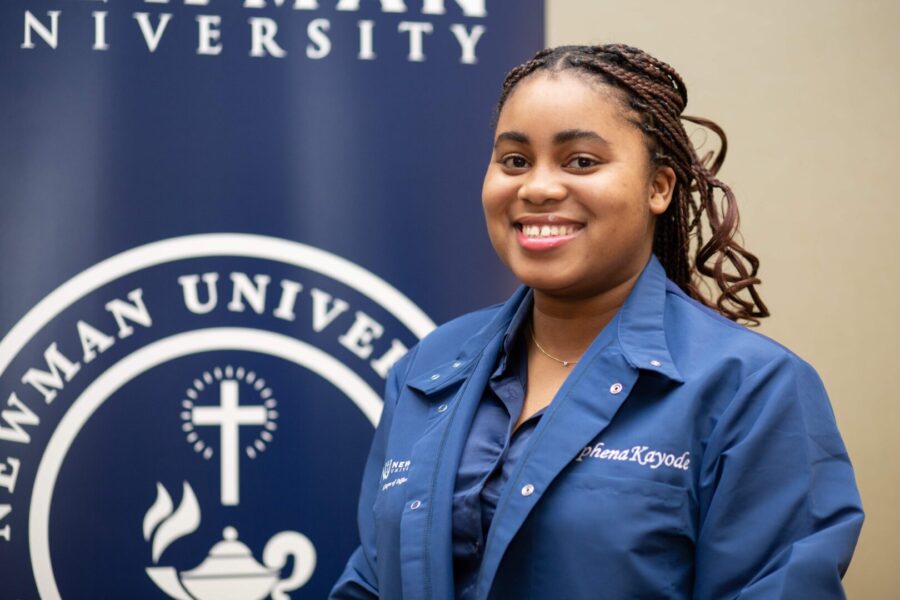
Newman’s nursing and science programs are among its most praised offerings. Students who have gone through these programs highlight the quality of instruction and the hands-on preparation they received before entering clinical or professional settings. In a field like nursing, where what you actually know and can do on day one matters enormously, the rigorous preparation Newman provides gives graduates a measurable advantage.
The science programs benefit from the same structural advantages as the rest of the university — small cohorts, accessible faculty, and a learning environment where students are not competing for attention. Pre-med students, in particular, find that Newman’s environment makes it easier to build the academic record and faculty relationships needed for medical school applications.
Faculty Connections That Open Doors to Grad School and Medical Fields
Getting into graduate school or a medical program requires more than a strong GPA. It requires recommendation letters from people who genuinely know your work, research experience, and ideally a faculty mentor who understands the application process. Newman’s small academic environment is unusually well-suited to providing all three. Faculty in the sciences and health programs at Newman have professional networks and a track record of helping students navigate the path beyond undergraduate education.
Free Tutoring and Advising Built Into the Experience
Newman’s tutoring and advising systems are not afterthoughts — they are central to how the university operates. Free tutoring is available across subjects, and academic advisors are actively involved in keeping students on track from semester one. The advising model at Newman is proactive, meaning advisors reach out before problems escalate rather than waiting for a student to show up in crisis. For a first-generation college student or anyone navigating higher education without a strong family roadmap, this kind of built-in structure is genuinely invaluable.

The Financial Reality of Choosing Newman
Cost is one of the first things families look at when comparing universities, and as a private institution, Newman’s sticker price deserves an honest conversation. However, the real cost of attending Newman — after scholarships, grants, and institutional aid — is often significantly different from the listed tuition. Understanding the full financial picture before ruling Newman out based on the private school label alone is critical.
Scholarships Available for Incoming and Enrolled Students
Newman University offers merit-based scholarships for incoming freshmen, and financial aid opportunities continue throughout a student’s enrollment. The university’s smaller size actually works in students’ favor here — with fewer students competing for institutional aid, the chances of receiving meaningful scholarship support are often better than at large public universities where aid is spread across tens of thousands of applicants. Prospective students should contact Newman’s financial aid office directly and ask specifically about merit scholarships tied to GPA and test scores, as well as any department-specific awards available in their intended field of study.
Newman Is One of Kansas’s First Hispanic-Serving Institutions
This is one of the most important and least talked-about facts about Newman University. Newman has earned designation as one of Kansas’s first Hispanic-Serving Institutions (HSIs), a federal classification that unlocks access to specific federal grants and funding streams. For eligible students, this designation can translate into additional financial aid opportunities beyond what standard institutional aid provides.
The HSI designation also signals something meaningful about Newman’s campus culture. It reflects a genuine commitment to serving a diverse student population, not just in language but in the structure of support available on campus. For Hispanic students and families evaluating university options in Kansas, Newman’s HSI status makes it a particularly strong and financially strategic choice.
Campus Life at Newman Is Tighter and More Connected
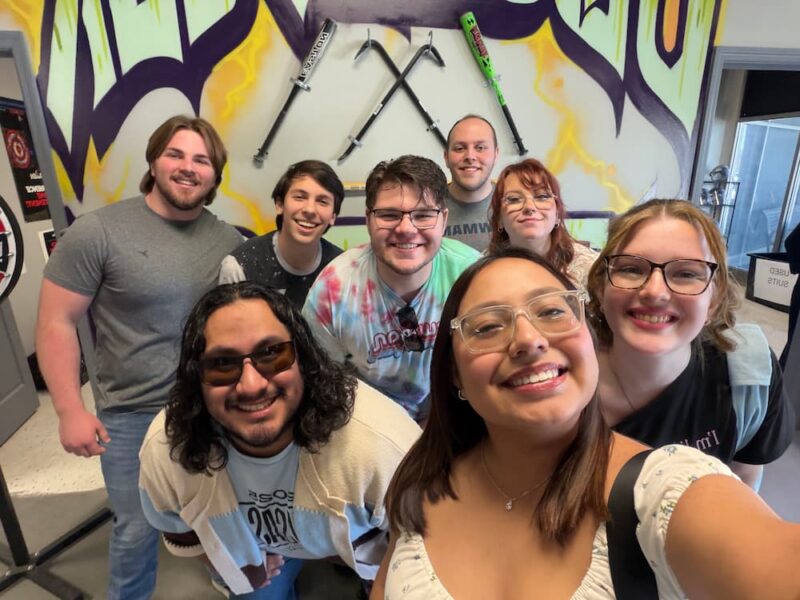
Campus life at a small private university looks and feels different than at a large public school, and at Newman, that difference tends to be a feature rather than a limitation. Students describe the campus atmosphere as welcoming, close-knit, and full of genuine school spirit despite the smaller scale. When everyone knows each other, involvement in campus life becomes natural rather than forced.
An E-Sports Program That Actually Pays Scholarships
One of the more surprising offerings at Newman is its competitive e-sports program — and it comes with real scholarship money attached. As e-sports continues to grow as both a competitive and academic field, Newman has positioned itself ahead of many larger institutions by formalizing the program and funding it. For students who are serious about competitive gaming, this is a legitimate path to offsetting college costs while pursuing something they are already passionate about.
Beyond the financial angle, the e-sports program reflects something broader about Newman’s willingness to evolve and take students’ interests seriously. It is not a club thrown together to check a box — it is a structured, scholarship-supported program that competes at a collegiate level. That kind of institutional investment in non-traditional student interests says a lot about campus culture.
- Competitive E-Sports: Scholarship-supported program competing at the collegiate level
- Athletics: Newman Jets compete in NAIA Division II across multiple sports
- Theater and Performing Arts: Active productions and performance opportunities on campus
- Student Organizations: A range of clubs reflecting the diversity of the student body
- Service and Leadership Programs: Opportunities tied directly to Newman’s core mission
What makes Newman’s campus activity landscape work is the size. At a large university, getting a meaningful role in theater, athletics, or student government often means competing against hundreds of other students. At Newman, motivated students find it much easier to take on leadership roles, get real stage time, and make a visible impact on campus life from their very first year.
The tight-knit community also means that social connections form faster and run deeper. Students at Newman consistently describe feeling like part of a family rather than a number in a system — and that sense of belonging has a measurable effect on both academic performance and overall well-being during what can be a challenging transition out of high school.
Athletics, Theater, and a Diverse Student Body
Newman’s Jets compete in NAIA Division II, giving student-athletes a path to competitive college sports without the intense recruitment pressure of larger NCAA programs. The athletic culture on campus contributes to school spirit and community without dominating the entire university identity. Theater and performing arts programs round out the extracurricular picture, giving creatively inclined students a real outlet and production experience that builds a portfolio alongside their degree.

Newman’s Catholic Roots Do Not Mean an Exclusive Community
Newman University was founded in the Catholic higher education tradition, and that heritage shapes its mission, its values, and its approach to education in meaningful ways. But one of the most consistent things students say about Newman is that its Catholic identity never felt exclusionary. The values of service, community, and human dignity that underpin a Catholic university translate into a campus culture that genuinely welcomes students from all backgrounds.
The mission statement itself is telling: Newman University exists to empower graduates to transform society. That is not a sectarian goal — it is a human one. The university’s focus on service and leadership creates a campus environment where students are encouraged to think about their education as something that extends beyond personal advancement into genuine community impact.
Students of All Faiths and Backgrounds Are Welcome
Students of all faiths — and no faith — attend Newman and describe feeling genuinely included in campus life. The university does not require students to be Catholic or to participate in religious activities, and the campus culture reflects that openness in practice, not just in policy. For families who might hesitate at the phrase “Catholic university,” Newman’s actual campus environment is worth experiencing firsthand before making assumptions about fit.
A Mission Built Around Service, Leadership, and Transforming Society
Newman’s mission — to empower graduates to transform society — is not just a tagline on a brochure. It actively shapes how the university approaches education, advising, and campus life. Service opportunities, leadership development programs, and a culture of community involvement are woven into the Newman experience in ways that prepare students for life beyond the classroom, not just employment after graduation. For students who want their college years to mean something beyond a credential, that mission creates a very different kind of educational environment.
What Newman Cannot Offer Compared to Larger Kansas Universities
Honesty matters here. Newman is not the right choice for every student, and understanding its limitations is just as important as understanding its strengths. If you are looking for a massive campus with hundreds of clubs, a Division I athletic program, a sprawling Greek life scene, or the social energy of 20,000-plus students, Newman will not deliver that. The University of Kansas and Kansas State University operate at a completely different scale, and for some students, that scale is exactly what they need.
Newman also has a more limited range of degree programs compared to large research universities. Students pursuing highly specialized fields — certain engineering disciplines, large research-backed doctoral programs, or niche technical degrees — may find that a larger institution serves their academic goals better. The key is being honest with yourself about what you are actually looking for and what environment you will genuinely thrive in.
Newman University Is the Right Fit for a Specific Type of Student
The student who gets the most out of Newman is someone who wants to be known, supported, and challenged in a close community. If you are a first-generation college student who needs a strong support structure, a pre-nursing or pre-med student who wants real faculty mentorship, a student of faith looking for values-aligned education, or simply someone who learns better in small, personal settings — Newman is built for you. The students who struggle at Newman are usually those who expected the social energy of a large campus and found the smaller scale limiting. Match your personality and your goals to the environment honestly, and the decision becomes much clearer.
Frequently Asked Questions
Here are the most common questions high school seniors and their families ask when evaluating Newman University as a college option.
Is Newman University accredited?
Yes. Newman University is regionally accredited by the Higher Learning Commission (HLC), which is the same accrediting body that covers major public universities across the Midwest, including the University of Kansas and Kansas State University. Regional accreditation is the gold standard in U.S. higher education, meaning Newman degrees are fully recognized and transferable. Several individual programs carry their own specialized accreditations as well, including:
- Nursing: Accredited by the Accreditation Commission for Education in Nursing (ACEN)
- Business programs: Recognized through relevant professional standards bodies
- Education programs: Approved by the Kansas State Department of Education
- Athletic Training: Accredited through the Commission on Accreditation of Athletic Training Education (CAATE)
Accreditation matters significantly when it comes to licensure exams, graduate school applications, and employer recognition. Newman’s HLC accreditation and program-specific credentials mean graduates enter their fields with credentials that carry full professional weight.
How big is Newman University compared to Kansas State University or the University of Kansas?
The size difference is substantial. Newman University serves approximately 857 students in an urban Wichita campus setting. The University of Kansas enrolls over 27,000 students, and Kansas State University enrolls over 20,000. Newman is intentionally small, and that size difference is the primary driver of the personalized academic experience the university is known for.
Does Newman University offer online classes?
Yes, Newman University offers online and hybrid course options across several programs, making it accessible for students who need scheduling flexibility. Graduate programs in particular have strong online components, which has expanded Newman’s reach beyond traditional on-campus learners.
For undergraduate students, the majority of the core Newman experience — small classes, direct faculty access, campus community — is designed around in-person engagement. Online options exist and are genuinely useful, but students who choose Newman specifically for its personal environment will get the most out of showing up on campus.
What is the acceptance rate at Newman University?
Newman University has an accessible admissions process, with an acceptance rate that reflects its mission to serve a broad range of students rather than gatekeep based on test scores alone. The university considers academic performance, personal background, and potential alongside standardized metrics.
This does not mean Newman is academically unchallenging — it means the university is focused on finding students who are genuinely motivated and a good fit for the community. Students with a solid high school GPA and a clear sense of what they want from their college experience will find the application process straightforward and the admissions team genuinely helpful in guiding them through it.
Is Newman University only for Catholic students?
No. Newman University welcomes students of all faiths, backgrounds, and belief systems. While the university was founded in the Catholic higher education tradition and that heritage shapes its values and mission, there is no requirement to be Catholic or to participate in religious activities to attend, thrive, or graduate from Newman.
Students from Protestant, Muslim, Jewish, non-religious, and other backgrounds consistently describe feeling welcomed and included in campus life. The values Newman operates from — service, dignity, community, and leadership — are human values that resonate across belief systems, not just within a single faith tradition.
If you are a student or family weighing Newman’s Catholic identity as a factor, the best approach is to visit campus, speak with current students from diverse backgrounds, and experience the environment directly. What you will likely find is a community that takes its values seriously without imposing them — a distinction that makes Newman genuinely inclusive in practice, not just in policy. Newman University’s commitment to empowering graduates to transform society is one worth exploring firsthand at newmanu.edu.
A Degree of Difference
Newman University is a nationally recognized college in Wichita, KS with award-winning programs that create global citizens empowered to change the future of society.