Kansas community college graduates can now finish a bachelor’s degree in criminal justice at Newman University in as few as 12 months under a new agreement between Newman and the Kansas Association of Community Colleges (KACC)
The pathway covers graduates of the association’s 19 community colleges and three technical colleges. It’s built for two groups that often stall out halfway to a bachelor’s degree: community college graduates who don’t want to start over, and working public-safety professionals who already know the job but haven’t finished their degree. Every eligible student also receives a $20,000 Newman scholarship.
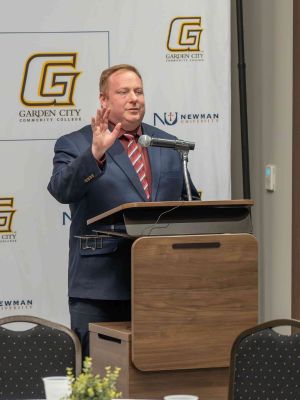
“A lot of people in Kansas law enforcement are two or three semesters from a bachelor’s degree and don’t know it,” said Alden Stout, vice president for academic affairs at Newman University. “They’ve been trained at the academy, they’ve served in the military, they’ve earned certifications, and none of it has ever been counted. This agreement counts it. Then it gets them to the finish line in about a year without asking them to leave the job or the community they serve.”
How to finish a criminal justice degree in one year
Newman’s Bachelor of Science in criminal justice takes 120 credit hours. A student with an Associate of Arts or Associate of Science degree transfers in up to 60 of those hours from their community or technical college. Newman then awards up to 30 hours of credit for prior learning.

law enforcement,
the court system,
forensics,
corrections, and
probation or parole.
That leaves about 30 hours to complete at Newman. A full-time student can finish those hours in two back-to-back semesters plus a summer or intervening term.
The prior learning credit means students save time in earning their degree. Credit is awarded only for learning that matches college-level work and doesn’t repeat credit a student has already earned. Newman will evaluate law enforcement basic training through the Kansas Law Enforcement Training Center and certification from the Kansas Commission on Peace Officers’ Standards and Training. It will also review military training and occupations listed on a Joint Services Transcript. In addition, employer and industry training, current professional certifications and credit-by-exam tests such as the College-Level Examination Program and DSST can be used as prior learning.
For Stout, the agreement fits Newman’s reason for existing.
“Newman was founded in 1933 to reach students who didn’t otherwise have access to a degree. That’s still the assignment,” Stout said. “A deputy in Liberal or a corrections officer in Coffeyville shouldn’t have to move to Wichita or start over to finish what they started. Now they don’t.”
Cost and support
Cost is built into the agreement. Every student admitted to the pathway as a graduate of a member college receives a $20,000 Newman scholarship toward the degree. Newman also matches, dollar for dollar, any federal Pell Grant or state of Kansas financial aid the student applies to the program.
“Many criminal justice professionals work full time protecting our communities while pursuing their education,” said Heather Morgan, executive director of the Kansas Association of Community Colleges. “This opportunity will shorten the time needed to complete their bachelor’s degree and significantly lower the cost, thanks to Newman’s generous scholarship offer.”
Students with an Associate of Arts or Associate of Science degree from a member college are assured admission to Newman with junior standing. Upper-division classes are offered in formats that work around a job, including online and hybrid options. Each student is assigned an academic adviser and a program liaison.

Transfer credits
Transfer credit follows the Kansas Board of Regents’ systemwide transfer framework, so courses on the state’s guaranteed transfer list move over as guaranteed. Graduates with an Associate of Applied Science degree are eligible, too. Their transcripts get a degree audit first to confirm Newman’s general education requirements have been met.
“Kansas community colleges do the first two years of a bachelor’s degree really well,” Stout said. “Our job is to make the last stretch short, affordable and worth finishing. This agreement is Newman and the community colleges sitting down together and agreeing on exactly how that works.”
What’s next
Newman and the association will review the agreement every year, looking at enrollment, credit awarded, time to completion and how students do after they finish.
Students and working professionals can learn more about the Bachelor of Science in criminal justice at newmanu.edu/academics/criminal-justice.

Members of KACC
Nineteen community colleges, plus Manhattan Area Technical College, Salina Area Technical College, and Flint Hills Technical College, make up the KACC.
Community colleges included in the association are Allen C.C., Barton C.C., Butler C.C., Cloud County C.C., Coffeyville C.C., Colby C.C., Cowley College, Dodge City C.C., Fort Scott C.C., Garden City C.C., Highland C.C., Hutchinson C.C., Independence C.C., Johnson County C.C., Kansas City Kansas C.C., Labette C.C., Neosho County C.C., Pratt C.C. and Seward County C.C.
Frequently asked questions
Q: Can I finish a criminal justice degree in one year in Kansas?
A: Yes. Under an agreement between Newman University and the Kansas Association of Community Colleges, graduates of Kansas community colleges can finish Newman’s Bachelor of Science in criminal justice in as few as 12 months of full-time study. Individual timelines depend on how much credit a student brings in and course availability.
Q: Who is eligible?
A: Graduates of the association’s 19 community colleges and three technical colleges who hold an Associate of Arts or Associate of Science degree are assured admission to Newman with junior standing. Graduates with an Associate of Applied Science degree are also eligible after a degree audit confirms general education requirements have been met.
Q: Does police academy or military training count for college credit?
A: It can. Newman awards up to 30 credit hours for prior learning. That includes law enforcement basic training through the Kansas Law Enforcement Training Center, certification from the Kansas Commission on Peace Officers’ Standards and Training, military training on a Joint Services Transcript, employer and industry training, professional certifications, and credit-by-exam programs such as CLEP and DSST.
Q: How do the credit hours add up?
A: The degree takes 120 credit hours. Students transfer up to 60 hours with their associate degree, and Newman awards up to 30 hours for prior learning. That leaves about 30 hours to complete at Newman, which a full-time student can finish in two semesters plus a summer or intervening term.
Q: How much does it cost?
A: Every student admitted to the pathway as a graduate of a member college receives a $20,000 Newman scholarship toward the degree. Newman also matches, dollar for dollar, any federal Pell Grant or state of Kansas financial aid the student applies to the program.
Q: Can I take classes online while working?
A: Yes. Upper-division classes are offered in formats that work around a job, including online and hybrid options. Each student is assigned an academic adviser and a program liaison.
Q: Where can I learn more?
A: Visit newmanu.edu/academics/criminal-justice.
Apply education to real life
Newman University’s criminal justice program is a research and practice program.