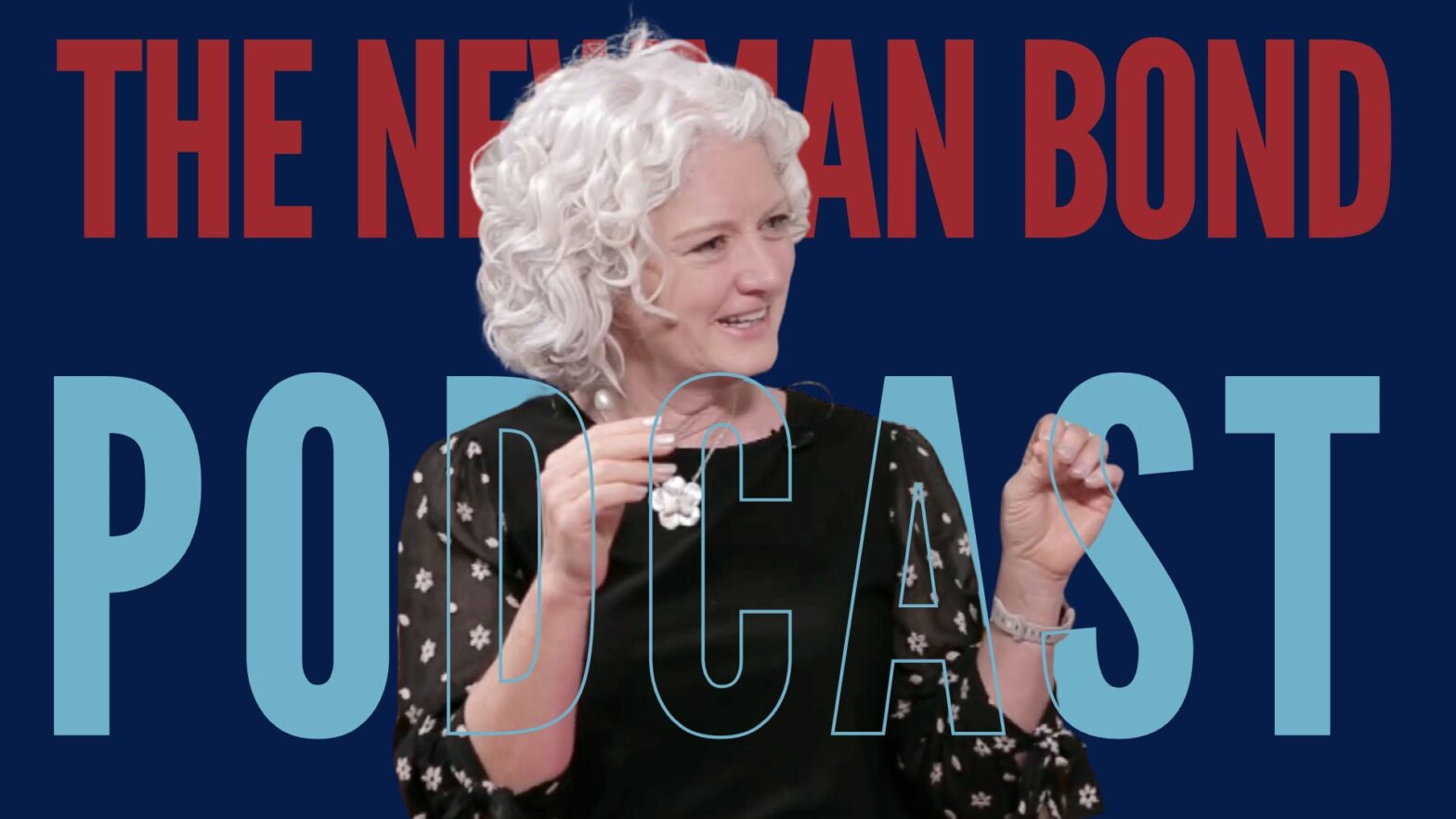
On this episode of “The Newman Bond” podcast, Marguerite Regan, Ph.D., director of teaching and learning, discusses the benefits of the Center for Teaching and Learning (CTL) on campus.
The CTL supports professors’ growth as educators through workshops, peer observation and reflection. Regan explains how creating a safe, supportive space for teachers ultimately leads to better teaching and stronger student outcomes.
Overview of conversation topics
Read on to skim or find timestamps of specific topics covered in this episode.

Welcome and introduction (0:00–1:00)
Introduction: Amy Brooks welcomes Regan, noting her 30+ years of teaching and her role as director of Newman University’s CTL.
Why faculty development matters (1:02-2:50)
Regan explains her passion for faculty development; she values strong CTLs in higher education and reflects on her early career experience with peer mentoring, reflective teaching and a growth mindset.
Building the Center for Teaching and Learning (3:25-4:33)
Regan describes how Newman secured a Title III grant and invited her to lead the creation of the CTL — a long-held dream of hers.
A safe space for educators (4:33-5:27)
What is the CTL? Regan describes it as a safe, confidential space for faculty (also students/staff) to learn together; it’s built on peer-to-peer teaching, reflection and a focus on the “instructional core” (teacher, student and content).
High-impact programming and critical teaching behaviors (6:12-8:08)
The CTL offers long-term faculty learning communities (16–18 hours each semester) built around evidence-based practices, as well as short-term offerings. They focus on “critical teaching behaviors” — concrete, research-validated instructional practices.
Reducing bias in feedback (8:28-9:19)
They use validated instruments based on critical teaching behaviors to minimize bias in feedback; this moves evaluation toward actionable teaching practices, not personality.
Engagement as professional self-care (10:09-11:35)
Regan likens engagement to self-care — faculty report feeling rejuvenated, more connected and gaining clarity about improving their teaching after participating.
Encouraging creative, cross-disciplinary teaching (13:22-14:36)
Through peer observation, faculty try new strategies, cross-pollinate ideas across disciplines and benefit from a high-trust, non-evaluative structure.
The peer observation model (15:00-17:11)
The peer observation is non-evaluative and confidential; observers come from other departments, and debriefs focus on reflective discussion, not grading.
National recognition at the American Association of Colleges and Universities (AAC&U) meeting (19:24-21:00)
Newman presented its CTL model at the AAC&U conference in Puerto Rico, highlighting the embedding of the Critical Teaching Behaviors framework in a community of practice.
Early evidence of student impact (21:52-23:08)
Early impact on students: Faculty have begun to assess their teaching by conducting focus groups. For example, students reported that redesigned, more transparent assignments felt more supportive and scaffolded.
Invitation to join the CTL community (24:24-26:39)
Regan encourages faculty to join either long-term or shorter-term programming; drop-in formats like lightning talks or office hours held in the CTL are options. She envisions the CTL growing into a shared, inter-learner space where all (faculty and students) talk about learning and teaching.
‘The Newman Bond’ podcast
Watch full episodes of “The Newman Bond” podcast on YouTube or listen on Spotify or Apple Podcasts.