Students across multiple healthcare disciplines stepped into a high-pressure clinical simulation on April 17 at Newman University.
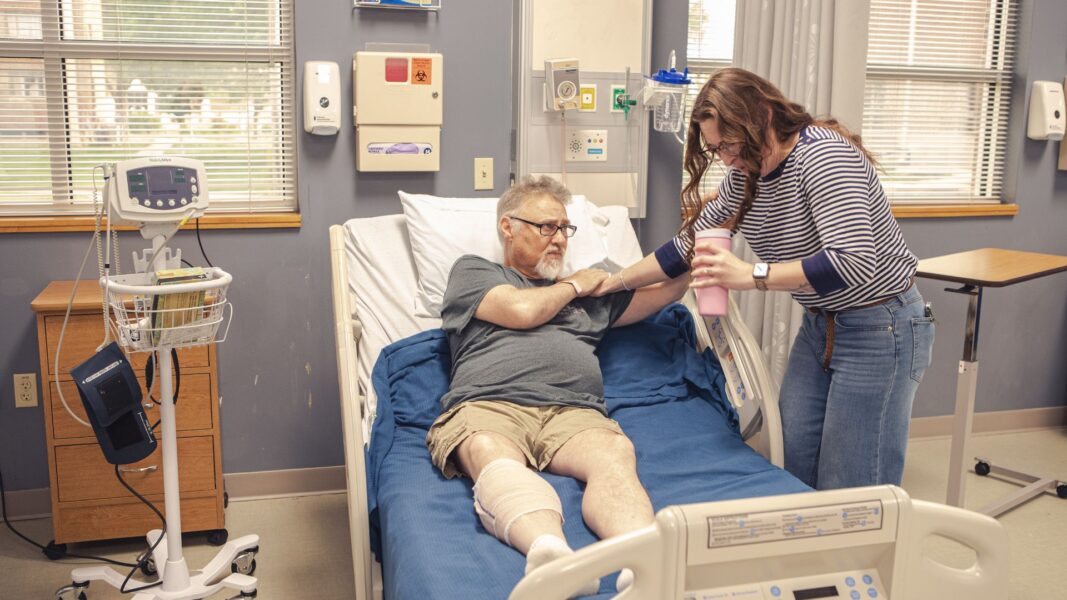
The School of Healthcare Professions hosted the clinical simulation for students in Newman’s nursing, diagnostic medical sonography, radiologic technology and respiratory care programs. Designed to showcase the realities of patient care, the experience immersed students in a hospital scenario featuring a physician, a 68-year-old patient and his wife.
Dean of the School of Healthcare Professions Tim Cho, M.D., explained that patient outcomes improve when students are comfortable navigating not only procedures and skills, but also the “human side” of healthcare through interpersonal communication.
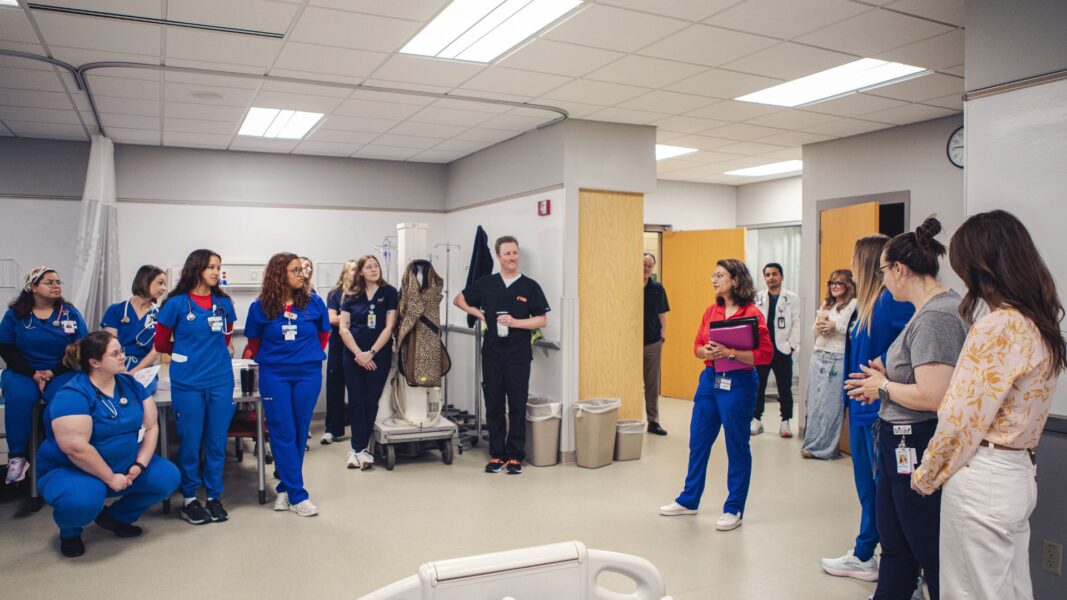
“A patient in distress isn’t just a set of vitals; there’s a family in the room who needs attention and reassurance, and a team that needs to communicate and support one another under pressure,” Cho said. “If we can build that comfort and confidence in our students before they reach the bedside, the patients and families they serve will be the ultimate beneficiaries.”
High-pressure roleplay
The healthcare simulation was the result of months of planning and collaboration among faculty across multiple programs, spearheaded by Nursing Instructor Yashasvi Nidal.
“We wanted students to leave feeling genuinely prepared for the real world,” Nidal said. “I reached out to Mark Mannette, director of the theater department, (who played) the role of the patient, and he was phenomenal. Our physician for the day was my husband, Raj, who just completed medical school, which meant we had someone with real clinical expertise in that role. Carli Ciesielski (director of clinical education for respiratory care) stepped in to play the patient’s partner. All three of them were incredible, maintaining their roles throughout the entire scenario without ever breaking character.”
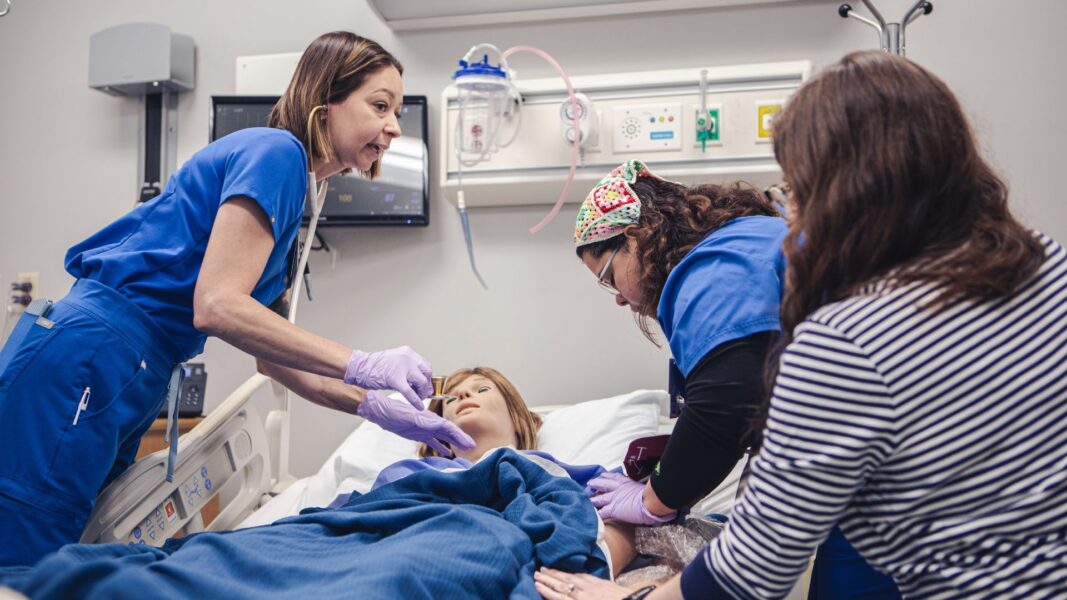
Students rotated through roles, assessing and treating the patient as his condition evolved and ultimately deteriorated, forcing them to respond in real time. Unlike traditional classroom exercises, the simulation introduced unpredictability. Students did not know what to expect from the medical scenario, so they had to rely on their training and instincts.
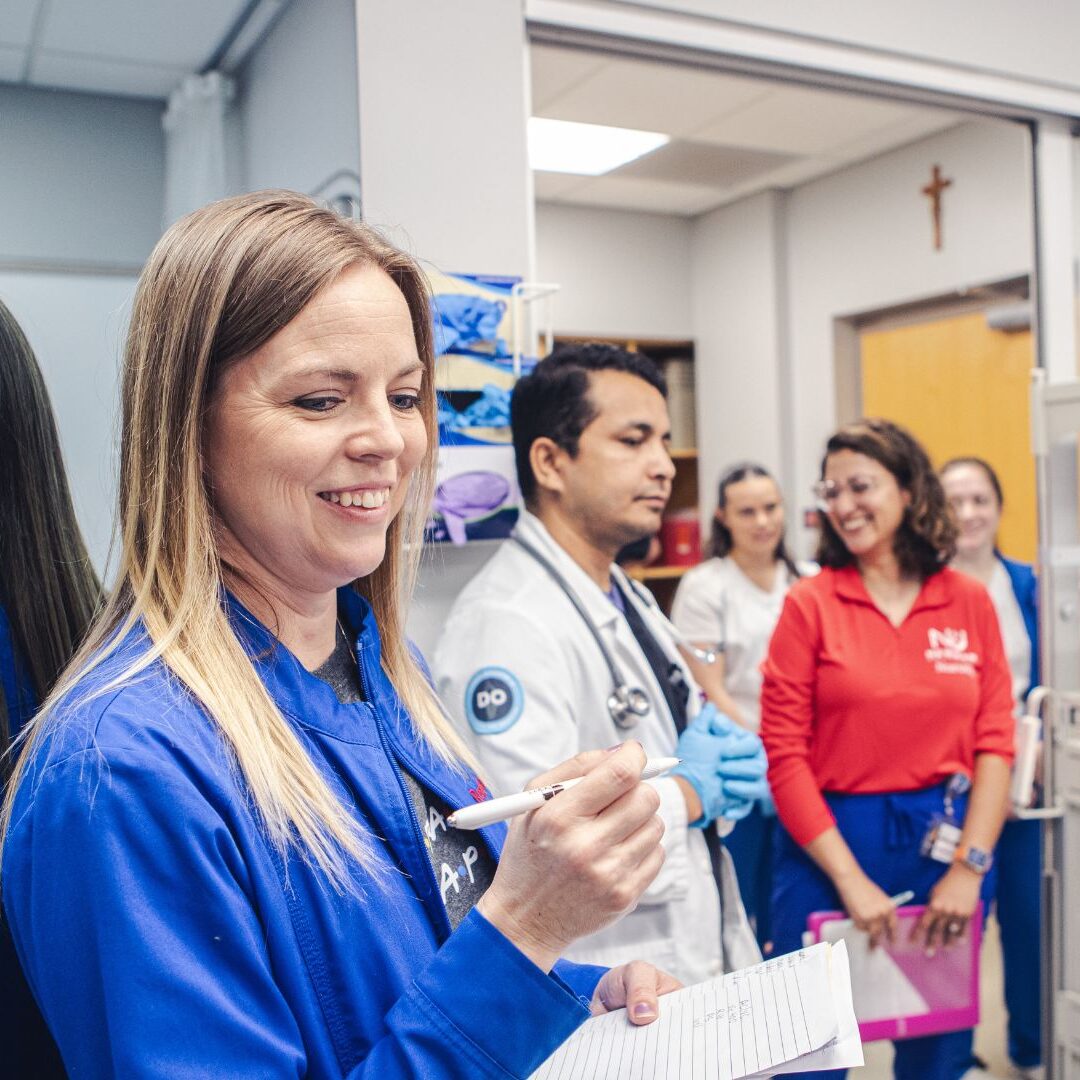
“The goal was to help them learn how to react and use the skills and the education they’ve received so far to treat the patient,” Stacie Fox, program director for respiratory care, said.
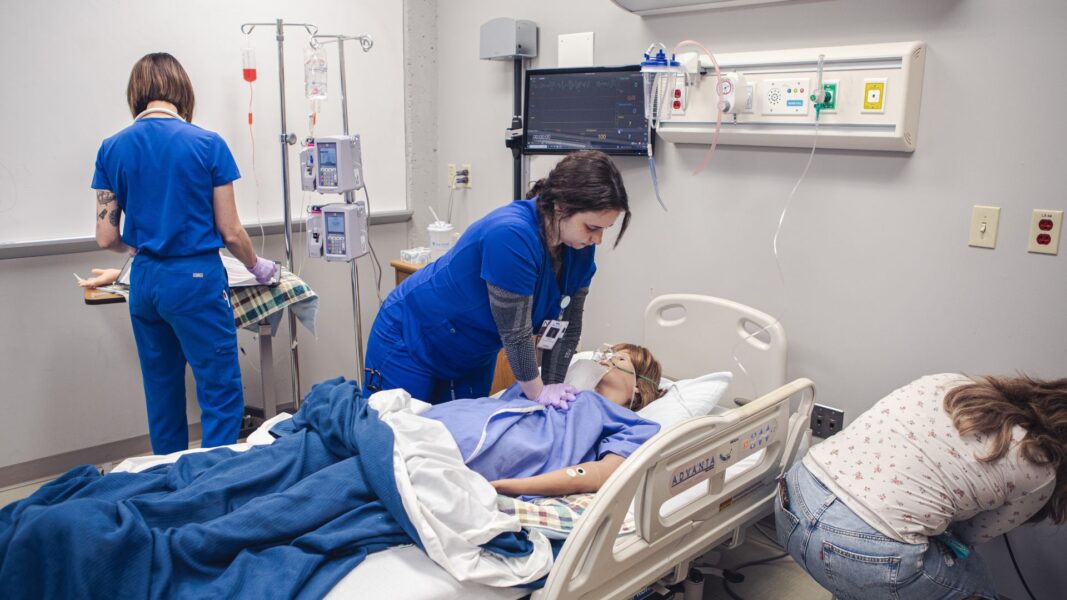
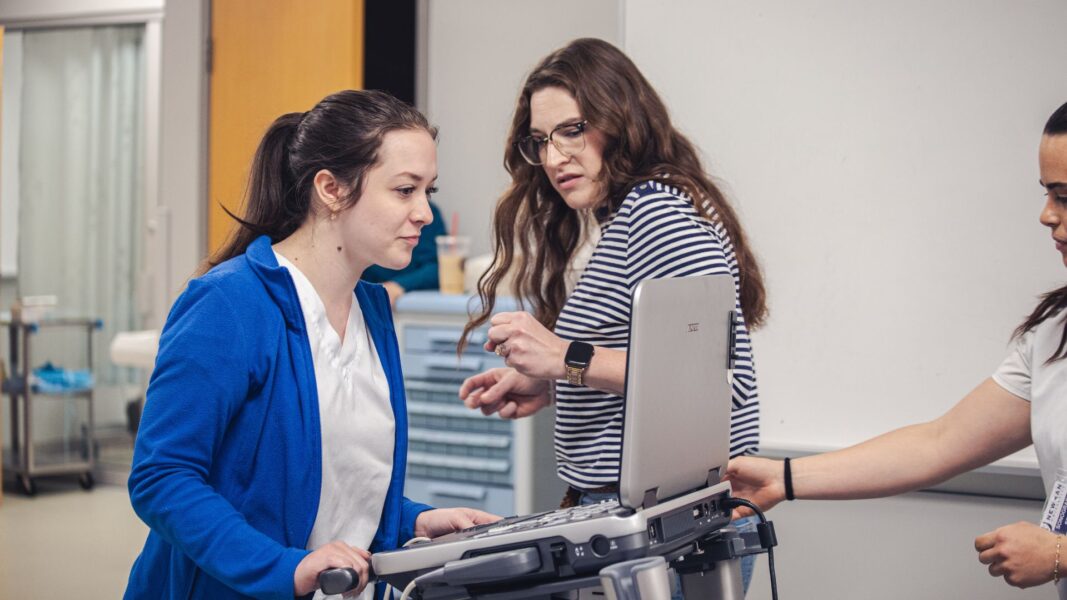
Students used various medical instruments such as ultrasound machines with real imaging, a ventilator from respiratory care, a portable X-ray machine from radiologic technology and even a talking, blinking and breathing simulation mannequin from nursing, along with simulated IVs and blood draws.
The most critical moment of the simulation, however, took place when the patient began to code. This required students to practice life-saving interventions, such as CPR.
For students like Taelor Parker, a diagnostic medical sonography senior, this experience left a lasting impression.
“I have never witnessed anything like this, and it was the most eye-opening part for me,” she said. “I was amazed watching the nurses, X-ray techs and respiratory care rush to complete their specialty’s task during this chaotic time.”
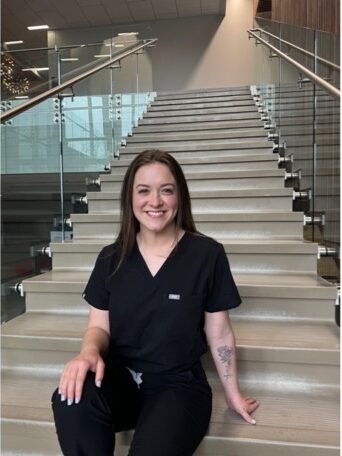
Parker added that seeing the “picture from start to finish of a patient’s care” helped her better understand her role on a team of future medical professionals.
“It was the perfect learning opportunity to witness the impact each of us will be making in a patient’s life while they are under our care,” Parker said.
Growing in confidence as future medical professionals
Fellow diagnostic medical sonography student Alyssa Rowland said the simulation deepened her appreciation for teamwork and pushed her beyond her comfort zone. She explained that while sonographers are required to have their Basic Life Support and CPR certification, they are not usually the medical personnel to administer it to patients.
“But there is still a small chance,” Rowland said. “During this simulation, I was put in a situation where I was giving CPR, which taught me that I should probably clean up my CPR skills. I also benefited from the patient’s family. Families at times can be very nervous … it’s important to explain what we are doing so they can feel at ease.”
Senior nursing major MichaelAnn Yates described the experience as both “exciting and terrifying,” she said.
“Practicing report and communication with the doctor, other nurses and the imaging team was nerve-wracking, but a valuable experience,” Yates said. “Reading about a protocol in a book will never equate to the knowledge gained in experience and practice. And that is what this simulation provided me: experience and practice.”
The simulation also affirmed that healthcare professionals may not always have the right answers, Yates said.
“It’s okay to be honest about that with the patient and family,” she added.
Parker said she would love to see Newman host more clinical simulations throughout the school year.
“As a student, it was such an impactful learning opportunity,” she said.
Bringing the simulation to life
When Nidal initially approached Cho with the idea for hosting a healthcare simulation, it stuck.
“Her excitement was infectious,” Cho said. “We began discussing the simulation together, and it was her enthusiasm for the initiative that led me to ask her to lead the project. That energy was critical, as it drove the development of something that ultimately grew beyond what any of us initially imagined.”
Nidal experienced simulations before, but said she didn’t find them particularly realistic or as beneficial for students as they could be. That conversation sparked a broader vision.
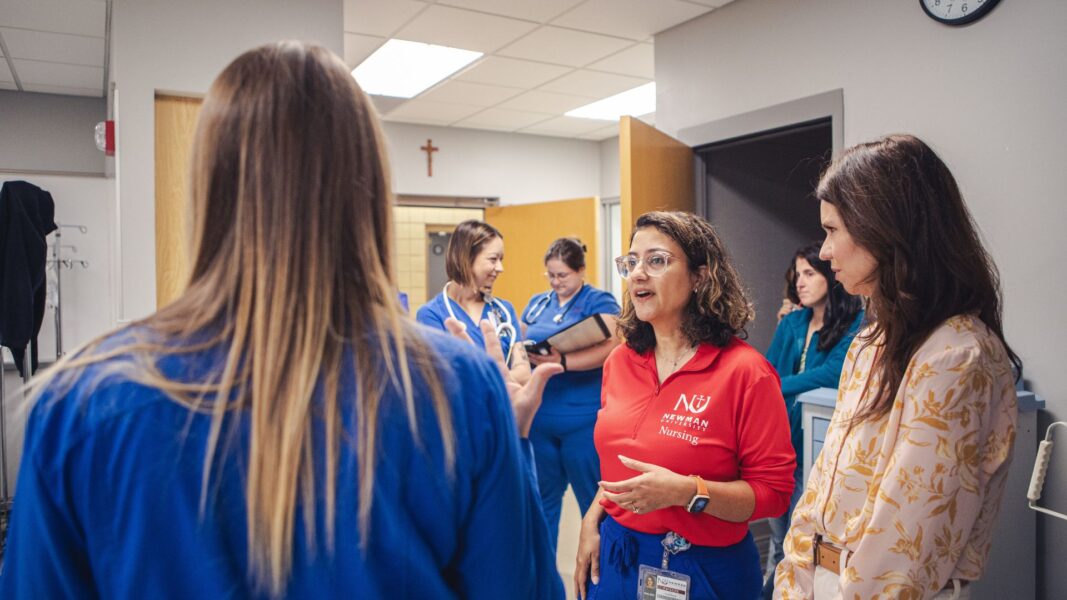
“Dr. Cho encouraged me to think bigger, pointing out that since our school has multiple disciplines under one roof, we had a unique opportunity to create something truly interprofessional, the way healthcare actually works in real life,” Nidal said.
To bring that vision to life, faculty combined resources across departments to create a fully immersive environment.
In addition to the actors, Nidal thanks all who helped bring the simulation to life: Cho, Fox, Director of Nursing Ashton Clarkson, Director of Diagnostic Medical Sonography Brooke Ward, Director of Radiologic Technology Jeffery Vaughn, Assistant Professor/Clinical Coordinator Radiologic Technology Jeskan McGovern, Clinical Coordinator of Sonography Lindsay Harris and Assistant Professor Megan Vickro.
“It truly became a faculty-wide effort, and I cannot overstate how much that mattered,” Nidal said.
Looking ahead
Nidal said she hopes students left the simulation feeling more confident in their critical thinking skills and feel more prepared to work as a team with fellow healthcare professionals.
“I hope that they truly internalized that interprofessional collaboration is not optional,” Nidal said. “It is how we keep people alive. Nurses, physicians, respiratory therapists and imaging professionals do not work in silos, and I want our students to feel that before they ever face it for the first time on their own.”
One of Cho’s biggest goals for every healthcare student at Newman is to provide a safe space for them to experience both routine and complex situations.
“Before students ever reach the bedside, we want them to have practiced that nuanced, holistic delivery of care,” Cho said.
The success of Newman’s first clinical simulation is just the beginning.
“I am genuinely proud of what this team pulled off, especially for a first run,” Nidal said. “My hope is that this becomes a regular and eventually required part of our curriculum.”
Explore programs in Newman’s School of Healthcare Professions
Graduates of any of the School of Healthcare Professions programs are highly sought after by the health care community in Wichita and the region.