As Associate Professor of Criminal Justice Kristi Barton Edwards reflects on Project Hope — a multi-year, data-driven effort to address issues of violent crime and homelessness within Wichita’s urban center — she feels immense pride in its success.
“The data tells the story,” she said. “The work we did during Project HOPE led to a reduction in arrests, suspect cases and victimization for the homeless in Wichita.”

Although the project concluded in September 2025, its impact will be felt for years to come, guiding responsive, evidence-based approaches to homelessness-associated public safety challenges in the community.
Project HOPE aligned perfectly with our mission and our values, and it truly showcased Newman’s fitness to lead in quantitative and qualitative research projects.”
Kristi Barton Edwards
Gaining hands-on experience
The project also included Newman students who gained hands-on experience analyzing crime data, helping plan interventions in the target area and working directly with a wide variety of professionals.
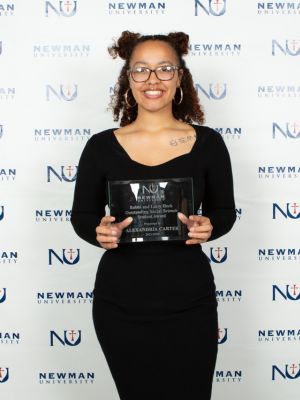
Students played meaningful roles throughout the project. Current student Jaydin Fields, a social work major, met, observed and shadowed social workers providing direct services to individuals experiencing homelessness, while former student Alexis Carter, a criminal justice major, did the same with law enforcement officers.
Former student Allison Williams, a psychology major, created and shared a powerful research tool — a homeless survey — to assess the wants and needs of Wichita’s unhoused residents. Former student Kenneth Hui, a business major, developed a data dashboard for the project.
Newman collaborations
In addition, many other Newman students attended meetings with Edwards to observe a task force in action. They also worked directly with professionals in local government — including city housing and law enforcement departments — and with nonprofit organizations such as United Way, Goodwill Industries, Salvation Army and Open Door Ministries. Collaborating with this diverse team of experts and service providers demonstrated the power of a multidisciplinary approach to addressing a complex social issue.
“All of these real-world experiences helped Newman students grow professionally and were unique ‘try before you buy’ opportunities to experience working in their profession as a provider before graduation,” Edwards said.
All of these real-world experiences helped Newman students grow professionally and were unique ‘try before you buy’ opportunities to experience working in their profession as a provider before graduation.”
Kristi Barton Edwards
Traditionally, grant work on the scale of Project HOPE is awarded to larger universities.
“In this instance, however, Newman showed stakeholders in the area that we are very much willing and able to meet the challenges of multi-year and data-driven projects,” Edwards said. “From application to conclusion, Newman provided reliable and credible work product and fostered quality, ongoing relationships with a wide variety of folks working to make Wichita a better place.”
Executing complex research projects
In fact, the success of Project HOPE has already generated requests for Newman’s involvement in several new initiatives with service providers across Sedgwick County.
“Project HOPE aligned perfectly with our mission and our values, and it truly showcased Newman’s fitness to lead in quantitative and qualitative research projects,” Edwards said. “I think Newman is built to transform society and thrives when it takes action to fight injustice. In this case, working to solve the social problem of homelessness in Wichita, we reminded folks outside the Newman universe that Newman’s close community and incredibly talented students, faculty and staff can plan, coordinate and execute complex research projects.”
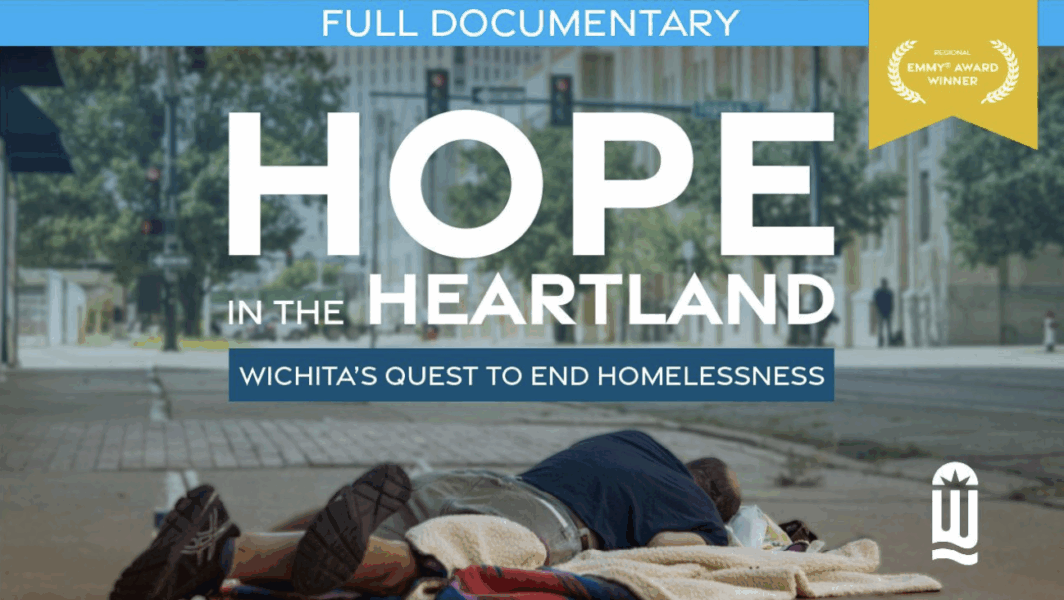
The project culminated in a documentary, “Hope in the Heartland: Wichita’s Quest to End Homelessness,” which received a Regional Emmy® honor for feature-length documentary.
The film also features Newman alumni, including JV Johnston ’82, executive director for the Guadalupe Clinic and a Wichita city council member, and Teresa Lovelady ’10, president and CEO of HealthCore Clinic Inc.